


Gene mutation causes sight loss in dogs and humans
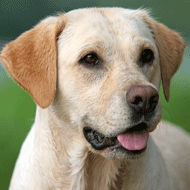
In healthy dogs, ABCA4 plays a vital role in the normal visual cycle when light hits the eye.
Scientists have identified a genetic mutation that causes retinal degenerative diseases in both humans and dogs.
In children and young adults, Stargardt disease is one of the most common types of inherited retinal degenerative disease. Now, an international research team has found that a mutation in the ABCA4 gene causes a similar disease in Labrador retrievers.
Published in PLOS Genetics, the findings could help to breed healthy dogs and develop novel treatment for human patients.
Labradors can suffer from inherited conditions such as progressive retinal atrophy (PRA), which is caused by the degeneration of photoreceptor cells. In humans, this is called retinitis pigmentosa (RP).
Until now, only one mutation in the PRCD gene had been found to cause inherited retinal degeneration in Labradors. But 10 years ago a dog was found to have visual impairment not caused by the previously known mutation.
In healthy dogs, ABCA4 plays a vital role in the normal visual cycle when light hits the eye. According to the new findings, dogs affected by the mutation cannot produce a functional ABCA4 protein. Toxic byproducts produced when the photoreceptors detect light cause cell death and lead to visual impairment.
Mutations in the ABCA4 gene are the major case of Stargardt disease in humans, which affects around one in 8,000-10,000 children and young adults. Scientists say disease progression appears to be similar in Labradors.
Study director Tomas Bergström said: “We hope that the results of this study will not only support breeding of healthy dogs, but also enhance the development of new treatments for children and young adults with Stargardt disease.”


 The Federation of Independent Veterinary Practices (FIVP) has announced a third season of its podcast, Practice Matters.



