


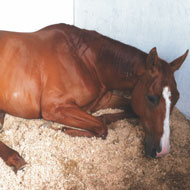
Research shows majority of owners struggle to spot the early signs
A novel scheme to help horse owners identify the early signs of colic has been launched by the University of Nottingham and the British Horse Society.
The ‘Vet REACT Colic Champions’ initiative comes in response to research that found one in three emergency veterinary call outs were due to equine colic, and that 90 per cent of horse owners struggle to spot the early signs of this deadly condition.
Backed by more than 60 veterinary surgeries, it will see vets across the United Kingdom raise awareness of colic further by giving their clients advice, presentations and resources. In turn it is hoped this will enable owners to develop their own plan should their horse develop the condition and need referral to an equine practice.
Emmeline Hannelly, welfare education manager at the BHS said: “It’s fantastic that so many vets are supporting our ‘Vet REACT Colic Champions’ scheme – we are delighted to be working with them! We hope that it will help even more owners to make informed decisions related to colic and in turn, improve equine welfare.”
Sarah Freeman, professor of veterinary surgery at the University of Nottingham said: “We are delighted to be working with vet practices on the ‘Vet REACT Colic Champions’ scheme. Their support and guidance have been a huge help in reaching such a wide population and we hope we can reach even more people in the future.”
Alex Kingdon, BVM BVS MRCVS from Avonvale Equine Practice added: “Being part of the ‘Vet REACT Colic Champions’ scheme is incredibly important to our practice. Colic is by far one of the most common emergency conditions we see, and the scheme has already had a huge impact on many horse owners.”
The Vet Champions scheme forms part of a wider initiative by the University of Nottingham and the British Horse Society to raise awareness of colic. More details about the campaigns can be found here.
Image (C) Marie Rippingale.


 Veterinary practices are being urged to help owners safely dispose of any unused and expired pet medicines - not just antibiotics - during November's Animal Medicines Amnesty.



