


Humans ‘eating megafauna to extinction’ - study
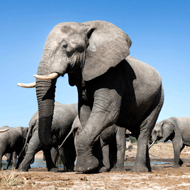
Researchers said minimising the direct killing of megafauna must be a priority.
New research suggests the biggest threat facing the world’s largest vertebrates, or megafauna, is being killed for human consumption of meat or body parts.
A study led by researchers from Oregon State University found 70 per cent of megafauna species are declining, while 59 per cent are threatened with extinction. Direct harvesting for meat and body parts poses a threat to 98 per cent of these species.
Researchers looked at the impact of human activities on six classes of megafauna: mammals, ray-finned fish, cartilaginous fish, amphibians, birds and reptiles.
Writing in the journal Conservation Letters, they said: ‘Our results suggest that we are in the process of eating the world’s megafauna to extinction’.
Species are hunted for meat for human consumption or body parts to be used as trophies or in Asian traditional medicine. Other species may be targeted for feathers, leather or egg collection.
Unintentional killing is also a cause of much mortality, as animals are caught as bycatch in gill net, trawls or longlines in aquatic systems.
On average, megafauna are 2.75 times more likely to be threatened with extinction than other vertebrate species assessed by the International Union for Conservation of Nature (IUCN). In other words, seven out of 10 megafauna species will suffer further population declines in the near future, while three in five could go extinct.
Nine species became extinct between the 1760s and 2012 as a result of excessive hunting, or a combination of hunting and habitat degradation.
Researchers said minimising the direct killing of megafauna must be a priority. They recommended informing the public through educational campaigns and celebrity input to reduce demand, alongside legislation to limit collection and trade. A large group of nations must take urgent and coordinated action, they added.


 Two independent vets have launched a podcast to help owners strengthen their bond with pets. Dr Maggie Roberts and Dr Vanessa Howie, who have worked in both veterinary practice and major charities, are keen to use their experience to enable people to give pets a better life.



