
Your data on MRCVSonline
The nature of the services provided by Vision Media means that we might obtain certain information about you.
Please read our Data Protection and Privacy Policy for details.

In addition, (with your consent) some parts of our website may store a 'cookie' in your browser for the purposes of
functionality or performance monitoring.
Click here to manage your settings.
If you would like to forward this story on to a friend, simply fill in the form below and click send.

Your friend's email:
Your email:
Your name:
 
 
Send Cancel

Overweight horses are becoming ‘the new normal’ - BEVA
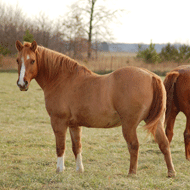
Studies suggest there are high levels of obesity in leisure horses and unaffiliated competition horses.
Vets and owners urged to work together to monitor horses 

Overweight horses are ‘the new normal’, as horse owner perceptions of a healthy weight become “distorted”, BEVA says.

Equine vets are urging horse owners to act now to prevent horses suffering weight-related health and welfare issues in spring, as studies suggest more than half of certain populations are overweight.

BEVA says horses and ponies can quickly gain excessive weight in today’s domesticated environment, with greater access to forage, hard feed, stabling and rugs.

Obesity in horses appears to be becoming more common, and not just in ponies and native breeds, BEVA adds. Studies suggest there are high levels of obesity in leisure horses and unaffiliated competition horses, particularly those competing in showing and dressage.

David Rendle, from BEVA’s health and medicines committee said: “Not only are many horses being unintentionally over-fed, over-rugged, and under-exercised but, as perceptions of what constitutes a healthy weight have become distorted, overweight has become the norm.

“A recent survey of more than 500 horse owners confirmed that owners have a poor ability to visually identify overweight animals and that perceptions of ideal weight for animals participating in showing classes was perceived to be significantly greater than for other equestrian disciplines.”

Lucy Grieve, chair the the ethics and welfare committee, added: “There seems to be a stigma attached to having a ‘fit’ or lean horse on many livery yards when, in fact, such a horse is highly likely to be healthier than its overweight neighbour.”

Vets and owners should work together as a team to routinely monitor horses, she added.

Become a member or log in to add this story to your CPD history

FIVP publishes CMA Compliance Checklist

News Story 1
 FIVP has published a CMA Compliance Checklist to support independent practices with the Market Investigation Order.

The document includes deadlines for small and large businesses, with tick boxes for each of the tasks. The organisation also invites practices to contact them for support with requirements.

Rita Dingwall, FIVP chair, said: FIVP appreciates that navigating the new CMA requirements can feel daunting. We hope this checklist will make things a little easier, helping independent practices work through what is required with confidence. 

Click here for more...
News Shorts
APHA launches free virtual work experience programme

The Animal and Plant Health Agency (APHA), in collaboration with Springpod, has launched a free virtual work experience programme, giving young people across the UK the chance to explore careers dedicated to protecting animal and plant health.

The on-demand programme offers a unique insight into career opportunities within APHA, showcasing how students can contribute to tackling some of the UK's most critical biosecurity and environmental challenges.

Designed for students aged 13 and over, the course includes more than 10 hours of engaging content featuring real-life industry insights, scenario-based challenges, and practical guidance on applying for jobs. To register for the course, visit the APHA website.

