


Overweight horses are becoming ‘the new normal’ - BEVA
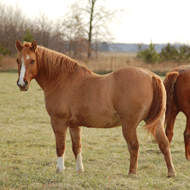
Studies suggest there are high levels of obesity in leisure horses and unaffiliated competition horses.
Overweight horses are ‘the new normal’, as horse owner perceptions of a healthy weight become “distorted”, BEVA says.
Equine vets are urging horse owners to act now to prevent horses suffering weight-related health and welfare issues in spring, as studies suggest more than half of certain populations are overweight.
BEVA says horses and ponies can quickly gain excessive weight in today’s domesticated environment, with greater access to forage, hard feed, stabling and rugs.
Obesity in horses appears to be becoming more common, and not just in ponies and native breeds, BEVA adds. Studies suggest there are high levels of obesity in leisure horses and unaffiliated competition horses, particularly those competing in showing and dressage.
David Rendle, from BEVA’s health and medicines committee said: “Not only are many horses being unintentionally over-fed, over-rugged, and under-exercised but, as perceptions of what constitutes a healthy weight have become distorted, overweight has become the norm.
“A recent survey of more than 500 horse owners confirmed that owners have a poor ability to visually identify overweight animals and that perceptions of ideal weight for animals participating in showing classes was perceived to be significantly greater than for other equestrian disciplines.”
Lucy Grieve, chair the the ethics and welfare committee, added: “There seems to be a stigma attached to having a ‘fit’ or lean horse on many livery yards when, in fact, such a horse is highly likely to be healthier than its overweight neighbour.”
Vets and owners should work together as a team to routinely monitor horses, she added.


 The BSAVA has opened submissions for the BSAVA Clinical Research Abstracts 2026.



