
Your data on MRCVSonline
The nature of the services provided by Vision Media means that we might obtain certain information about you.
Please read our Data Protection and Privacy Policy for details.

In addition, (with your consent) some parts of our website may store a 'cookie' in your browser for the purposes of
functionality or performance monitoring.
Click here to manage your settings.
If you would like to forward this story on to a friend, simply fill in the form below and click send.

Your friend's email:
Your email:
Your name:
 
 
Send Cancel

Empathy for animals linked to oxytocin gene
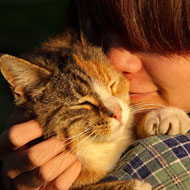
The research has linked genetics to relationships between humans and animals.
Research identifies genetic difference in animal lovers
 
Researchers at the University of Edinburgh’s Roslin Institute and Scotland’s Rural College (SRUC) have discovered that animal lovers have a specific version of the oxytocin gene.

Oxytocin, often called the love hormone, influences human behaviour and levels rise with social bonding.

DNA samples from 161 student volunteers were analysed in the study, and participants were instructed to complete a questionnaire to indicate their compassion towards animals.

Results identified a genetic difference in those who displayed high empathy for animals; specifically, within the gene that produces oxytocin.

According to the researchers, this is the first time that genetics has been linked to relationships between humans and animals.

Dr Sarah Brown, from the University of Edinburgh’s Roslin Institute, stated: “We already knew that oxytocin was important for empathy between people but now we know it helps us bond with animals too.”

Results also concluded that more women than men reacted positively towards animals, as did those working in the animal care sector.

Commenting on the study, Professor Alistair Lawrence from the University of Edinburgh’s Roslin Institute and SRUC, said: “This research is only the beginning but we hope that these findings could help us to devise strategies to help improve animal welfare across the UK.”

Become a member or log in to add this story to your CPD history

FIVP announces third series of Practice Matters

News Story 1
 The Federation of Independent Veterinary practices (FIVP) has announced a third season of its podcast, Practice Matters.


Hosted by Ian Wolstenholme, series three will focus on the Competition and Markets Authority (CMA) investigation, including a discussion about some of the expected impacts on independent veterinary colleagues.

Episode one launches on 13th January with guests Drs David Reader and Scott Summers, who will draw on their research into the CMA investigation and provide insights into themes such as transparency, pricing and consumer trust.

Ian Wolstenholme said: "In its third series, we will try and hone in on what the changes will mean in reality for independent practices with advice and guidance on implementation and delivery, drawing on the experience of our own team and other experts in the profession. Hope you can join us soon!" 

Click here for more...
News Shorts
Survey seeks ruminant sector views on antimicrobial stewardship

A new survey is seeking views of people working in the UK ruminant sector on how to tackle the challenge of demonstrating responsible antibiotic stewardship.

Forming part of a wider, collaborative initiative, the results will help identify the types of data available so that challenges with data collection can be better understood and addressed.

Anyone working in the UK farming sector, including vets and farmers,is encouraged to complete the survey, which is available at app.onlinesurveys.jisc.ac.uk