


Celebrities sign open letter to company’s CEO
eBay has come under pressure to better regulate the sale of dogs and other animals across its classified ad sites worldwide.
Animal charity Four Paws has sent an open letter, co-signed by 24 high profile animal lovers, urging eBay to take steps to ensure unscrupulous sellers can be traced.
Signatories include Dame Judi Dench, Paul O’Grady, Matt Lucas and Marc Abraham. The letter was sent to the CEO of eBay’s global head office, along with a petition signed by over 210,000 people.
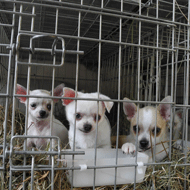
Every Christmas, thousands of puppies are sold via classified ad sites during the festive period. It is estimated that 2.4 million dogs are traded each year across eBay’s European sites alone. Four Paws says many of these animals come from overcrowded and unhygienic puppy farms and are often sold with fraudulent paperwork.
Anonymity is one of the key issues, as sellers can delete their accounts after a successful sale, then open new accounts, making them untraceable. Campaigners are calling for eBay to introduce mandatory seller identity verification to tackle this problem.
Gumtree UK, which is owned by eBay, recently decided to introduce a paywall for all those wishing to sell animals on the site. Sellers must provide credit card or banking details before they can advertise, which enables identity verification. However, its sister sites and other eBay sites are yet to follow suit.
Four Paws said there is growing evidence to suggest that sites including eBay Kleinanzeigen in Germany and Marktplaats in the Netherlands, are providing a platform for dealers with easy access to buyers and seriously flawed controls.
Usage policies for eBay Kleinanzeigen state that private sellers cannot publish more than one dog advert a year. However, research suggests that four out of 10 sellers put more than one advert online and were selling puppies on a commercial level, whilst advertising as private sellers.
Joanna Randall, the charity’s international head of companion animal campaigns, said: “People all over the world have learned about the cruel illegal puppy trade, and the role that classified ad sites play in helping to facilitate it due to anonymous trading.
“Now there is an opportunity for eBay to make a stand for puppies sold via their classified ad sites by implementing seller identity verification and enforcing stricter animal welfare measures across all their classified ad sites.”
Image © VIER PFOTEN


 Defra has published guidance for the vet sector ahead of a proposed UK-EU Sanitary and Phytosanitary agreement.



