
Your data on MRCVSonline
The nature of the services provided by Vision Media means that we might obtain certain information about you.
Please read our Data Protection and Privacy Policy for details.

In addition, (with your consent) some parts of our website may store a 'cookie' in your browser for the purposes of
functionality or performance monitoring.
Click here to manage your settings.
If you would like to forward this story on to a friend, simply fill in the form below and click send.

Your friend's email:
Your email:
Your name:
 
 
Send Cancel

Future of 137 animals secured by RSPCA as animal sanctuary closes
Lack of donations led to the sanctuary's closure.

Lack of funds leads to closure of Capricorn Animal Sanctuary in Wales

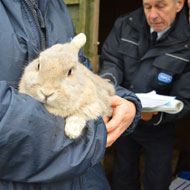
RSPCA Cymru has successfully secured the future of 137 animals formally kept at Capricorn Animal Sanctuary in Padeswood, Wales.

The sanctuary, which has faced enormous financial hardship, was unable to continue taking care of the rescued animals. This pressure would have been intensified due to the vast array of species kept at Capricorn; many of which require complex and expensive care.

A total of 41 cats, 17 birds, 14 rabbits, 10 dogs, 10 hamsters, eight guinea pigs, five bearded dragons, five degus, five pigs, five ferrets, three snakes, two gerbils, one chinchilla and a goose were collected by the RSPCA and transported to boarding establishments and specialist centres. Each animal received an examination by a veterinarian before being transferred.

RSPCA Cymru commented that it would have been “exceptionally difficult” to supply the required level of care for such a large variety of species in a small sanctuary without enough donations from the public.

A statutory inquiry of Capricorn Animal Sanctuary by the Charity Commission led to Guy Hollander of Mazars LLP being appointed as interim manager of Capricorn in July 2018.

Hollander subsequently decided that the sanctuary was no longer viable and contact began with the RSCPA to start the operation of rehoming the animals residing at Capricorn.

The RSPCA are concerned about the lack of regulation of animal sanctuaries in Wales and have long campaigned for a change in the law.

“Many sanctuaries do a great job” stated Claire Lawson, RSPCA Cymru Assistant Director of External Relations. “But the lack of regulation is a major cause for concern.”

Capricorn Animal Sanctuary is not under any RSPCA investigation.

If you wish to help RSPCA Cymru, you can donate online here.

Image (c) RSPCA

Become a member or log in to add this story to your CPD history

Defra shares new Sanitary and Phytosanitary guidance

News Story 1
 Defra has published guidance for the vet sector ahead of a proposed UK-EU Sanitary and Phytosanitary agreement.


The agreement, which will change the movement and trade of animals and related products, could see reductions in checks, paperwork and certification. As well as describing regulatory developments, the advice highlights the importance of animal ID, registration and traceability in disease control and other compliance arrangements.

The guidance can be found here. More detail is expected as negotiations progress. 

Click here for more...
News Shorts
BSAVA publishes fifth Manual of Canine and Feline Neurology

The BSAVA has published the fifth edition of its BSAVA Manual of Canine and Feline Neurology.

The new edition has been reviewed and updated, including new developments in diagnostics, therapeutic approaches and clinical decision-making. It is structured to support clinicians through diagnosis, treatment and long-term management.

The guide features five new chapters covering acute myelopathies, chronic myelopathies, emergency protocols, neurotoxicology and neuro-oncology.

It also includes over 100 videos, including demonstrations of neurological examinations, clinical presentations and diagnostic procedures.

Nicola Lloyd, publishing manager, said: "Whether you're a general practitioner seeking practical guidance, or a specialist aiming to refine your expertise, this edition remains an indispensable reference for anyone involved in the care of neurologically compromised dogs and cats."
