
Your data on MRCVSonline
The nature of the services provided by Vision Media means that we might obtain certain information about you.
Please read our Data Protection and Privacy Policy for details.

In addition, (with your consent) some parts of our website may store a 'cookie' in your browser for the purposes of
functionality or performance monitoring.
Click here to manage your settings.
If you would like to forward this story on to a friend, simply fill in the form below and click send.

Your friend's email:
Your email:
Your name:
 
 
Send Cancel

Frogs may be able to co-exist with chytrid fungus - study
“Our results are really promising because they lead us to conclude that the El Copé frog community is stabilizing and not drifting to extinction.”

Scientists say infected and uninfected frogs survive at nearly the same rates 

Tropical frogs may have developed the ability to coexist with deadly chytrid fungus, a new study suggests.

In just a few months in 2004, around half the frog species native to El Copé, Panama, went locally extinct due to Batrachochytrium dendrobatidis.

However, scientists now believe that the remaining species may have developed the ability to survive alongside the fungus.

A field study led by the University of Maryland from 2010-2014 suggests that frogs infected with the fungus survived at a nearly identical rate to uninfected frogs.

Scientists say that although there were lots of infected individuals, around 98 per cent of them are infected at very low levels.

It is thought that the frog population stabilised through ‘eco-evolutionary rescue’, whereby some species evolved tolerance to the fungus, while other highly infectious species died off and stopped contributing to the pathogen’s spread. Scientists said the fungus may also have become less virulent.

“Our results are really promising because they lead us to conclude that the El Copé frog community is stabilizing and not drifting to extinction,” said lead author Graziella DiRenzo. “That’s a big concern with chytrid worldwide. Before this study, we didn’t know a lot about the communities that remain after an outbreak. In some areas, it’s still a black box.”

Researchers say it is likely that other hard-hit frog communities elsewhere in the world may have undergone similar adaptations. 

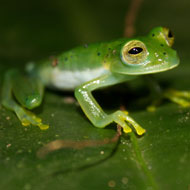
Image © Brian Gratwicke

 

Become a member or log in to add this story to your CPD history

Vets and vet nurses needed for nutrition study

News Story 1
 The University of Glasgow is seeking participants for a new study into vet professionals nutrition-related knowledge, competence and decision-making.


UK-based veterinary surgeons and registered veterinary nurses are being invited to take part in a project investigating nutrition-related patient care and client advice. Participants must have been qualified for between two and 10 years, and must be currently working in clinical practice with small animals.

To register to take part, those interested should complete a screening questionnaire. 

Click here for more...
News Shorts
APHA launches free virtual work experience programme

The Animal and Plant Health Agency (APHA), in collaboration with Springpod, has launched a free virtual work experience programme, giving young people across the UK the chance to explore careers dedicated to protecting animal and plant health.

The on-demand programme offers a unique insight into career opportunities within APHA, showcasing how students can contribute to tackling some of the UK's most critical biosecurity and environmental challenges.

Designed for students aged 13 and over, the course includes more than 10 hours of engaging content featuring real-life industry insights, scenario-based challenges, and practical guidance on applying for jobs. To register for the course, visit the APHA website.
