
Your data on MRCVSonline
The nature of the services provided by Vision Media means that we might obtain certain information about you.
Please read our Data Protection and Privacy Policy for details.

In addition, (with your consent) some parts of our website may store a 'cookie' in your browser for the purposes of
functionality or performance monitoring.
Click here to manage your settings.
If you would like to forward this story on to a friend, simply fill in the form below and click send.

Your friend's email:
Your email:
Your name:
 
 
Send Cancel

Study sheds light on foetal development in humans and pigs
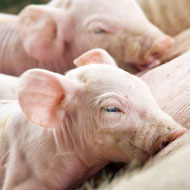
It is thought the differences observed after birth could arise early in development
Non-invasive method monitors blood flow during pregnancy 

Light sedation of pigs in early pregnancy could be linked with decreased foetal weight, according to a new study, which has important implications for human and veterinary medicine.

Scientists from the Roslin Institute have developed the first non-invasive method to monitor blood flow at multiple stages of pregnancy, offering fresh insights into pre-natal piglet growth.

There is often a great deal of variation in the birth weight of piglets, with many litters having a ‘runt’. It is thought the differences observed after birth could arise early in development, raising questions about the role of blood supply to foetuses during pregnancy.

The research team found that changes in foetal heart rate and umbilical blood flow were linked with the stage of pregnancy, in a similar way to humans.

Lead author Dr Claire Stenhouse said: “It is hoped, with further optimisation, it may be feasible to measure blood flow in the umbilical cord of growth-restricted piglets throughout pregnancy.

“This is also of great interest in humans, particularly in the context of use of sedatives during pregnancy and improving the understanding of intrauterine growth restriction.”


Become a member or log in to add this story to your CPD history

Defra shares new Sanitary and Phytosanitary guidance

News Story 1
 Defra has published guidance for the vet sector ahead of a proposed UK-EU Sanitary and Phytosanitary agreement.


The agreement, which will change the movement and trade of animals and related products, could see reductions in checks, paperwork and certification. As well as describing regulatory developments, the advice highlights the importance of animal ID, registration and traceability in disease control and other compliance arrangements.

The guidance can be found here. More detail is expected as negotiations progress. 

Click here for more...
News Shorts
New form for online veterinary medicines retailers

The Veterinary Medicines Directorate (VMD) has produced a new online form for retailers wishing to sell veterinary medicines on the internet.

The form replace the previous Word version and is part of the VMD's ongoing commitment to digitise its processes. Anyone retailing prescription medicines online, including POM-V, POM-VPS and NFA-VPS categories, is lawfully required to register with the VMD before trading.

The change only applies to new applicants. Retailers already listed on the VMD's Register of Online Retailers or registered under the Accredited Internet Retailer Scheme (AIRS) do not need to do anything.