
Your data on MRCVSonline
The nature of the services provided by Vision Media means that we might obtain certain information about you.
Please read our Data Protection and Privacy Policy for details.

In addition, (with your consent) some parts of our website may store a 'cookie' in your browser for the purposes of
functionality or performance monitoring.
Click here to manage your settings.
If you would like to forward this story on to a friend, simply fill in the form below and click send.

Your friend's email:
Your email:
Your name:
 
 
Send Cancel

Study sheds light on foetal development in humans and pigs
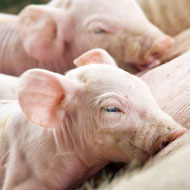
It is thought the differences observed after birth could arise early in development
Non-invasive method monitors blood flow during pregnancy 

Light sedation of pigs in early pregnancy could be linked with decreased foetal weight, according to a new study, which has important implications for human and veterinary medicine.

Scientists from the Roslin Institute have developed the first non-invasive method to monitor blood flow at multiple stages of pregnancy, offering fresh insights into pre-natal piglet growth.

There is often a great deal of variation in the birth weight of piglets, with many litters having a ‘runt’. It is thought the differences observed after birth could arise early in development, raising questions about the role of blood supply to foetuses during pregnancy.

The research team found that changes in foetal heart rate and umbilical blood flow were linked with the stage of pregnancy, in a similar way to humans.

Lead author Dr Claire Stenhouse said: “It is hoped, with further optimisation, it may be feasible to measure blood flow in the umbilical cord of growth-restricted piglets throughout pregnancy.

“This is also of great interest in humans, particularly in the context of use of sedatives during pregnancy and improving the understanding of intrauterine growth restriction.”


Become a member or log in to add this story to your CPD history

VMD invites students to apply for EMS placement

News Story 1
 The Veterinary Medicines Directorate (VMD) is inviting applications from veterinary students to attend a one-week extramural studies (EMS) placement in July 2026.


Students in their clinical years of study have until 28 February to apply for the placement, which takes place at the VMD's offices in Addlestone, Surrey, from 6-10 July 2026.

Through a mixture of lectures and workshops, the placement will explore how veterinary medicines are authorised, non-clinical career opportunities, and other important aspects of the VMD's work.  

Click here for more...
News Shorts
RCVS members invited to question Council candidates

RCVS members have been invited to submit questions to candidates for this year's RCVS Council election.

With 15 candidates standing for three available positions, vets have been invited to submit a question of their choosing before voting starts. These questions will be collated, with each candidate answering one question of their choice.

It is recommended that members read the candidates' biographies and statements before submitting questions. One question per member can be submitted to vetvote26@rcvs.org.uk before Wednesday, 25 February 2026.

The RCVS Council election is due to start in March.

With only two candidates for two positions on the VN Council, there will be no VN Council elections this year. Meghan Conroy RVN and Lauren Hargrave RVN will begin their three year terms at RCVS' AGM in July.