


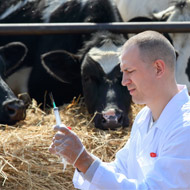
#VaccinesWork to highlight variations in vaccine penetration
The Responsible Use of Medicines in Agriculture (RUMA) has launched a new campaign to remind prescribers and farmers of the importance of vaccines in protecting all farm animal sectors.
The campaign, #VaccinesWork, aims to highlight variations in vaccine penetration between farm and animal sectors. In particular, it will show where there may be scope for greater uptake and the gains from storing, handling and administering vaccines correctly.
RUMA says the poultry and fish sectors have had success in using vaccines for many years as part of comprehensive and integrated health programmes, and that it hopes other sectors will take inspiration from this.
“Vaccination is not a ‘silver bullet’ for disease control, but it can be an important part of an infection prevention and control of disease planning process, which all farms should have in place in consultation with their vet,” explains RUMA’s secretary general Chris Lloyd.
“In the sheep and cattle sectors, uptake of vaccines is generally low, so the campaign will ask farmers and prescribers to consider whether there is scope to increase levels of vaccination to improve herd or flock immunity – and potentially profitability – on their farms.
“Vaccination is already much higher in pigs, but improving how vaccines are stored, handled and administered could boost results significantly.”
RUMA said that in order to ensure prescribed vaccines work effectively, it is essential that the manufacturer and prescriber’s instructions on storage, dose rate and dose interval are followed accurately.
It adds that a disease challenge may present itself for which there is no suitable licensed vaccine. In consultation with the farm vet, laboratories can sometimes develop autogenous vaccines specific to the pathogen causing the problem on the farm.
In some circumstances, the vet may also be able to import a suitable vaccine from either another EU country or from outside of the EU, said RUMA. For more information about #VaccinesWork, please click here


 Veterinary practices are being urged to help owners safely dispose of any unused and expired pet medicines - not just antibiotics - during November's Animal Medicines Amnesty.



