Your data on MRCVSonline
The nature of the services provided by Vision Media means that we might obtain certain information about you.
Please read our Data Protection and Privacy Policy for details.

In addition, (with your consent) some parts of our website may store a 'cookie' in your browser for the purposes of
functionality or performance monitoring.
Click here to manage your settings.
If you would like to forward this story on to a friend, simply fill in the form below and click send.

Your friend's email:
Your email:
Your name:
 
 
Send Cancel

Nurses take part in beach clean for VNAM
"Litter, especially plastics and fishing gear, can cause devastating and often life-threatening problems for our wildlife and eco system."

Plastic drinks caps among the most common rubbish items

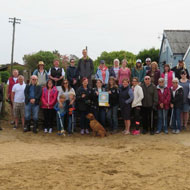
Veterinary nurses took part in the first beach clean for Veterinary Nursing Awareness Month (VNAM) this year, clearing 27 bags of rubbish from Old Hunstanton Beach in Norfolk.

The beach clean, attended by over 40 people, was organised by BVNA Council member Jo Hinde and RVN Diane Westwood-Rowland.

“Veterinary nurses are often giving their very little spare time to causes that improve welfare for both humans and animals,” Jo Hinde said. “Beach cleans are a great example of this. Litter, especially plastics and fishing gear, can cause devastating and often life-threatening problems for our wildlife and eco system.

She added: “It was super to have the support of nurses and the general public on the day and help raise awareness of this problem as well as highlight some of the amazing things that veterinary nurses do.”

The most common waste items found during the beach clean were plastic caps from bottled drinks, cotton ear bud sticks and baby wipes. Other frequently found items were fishing netting, rope and monofilament lines, which can all be deadly to many animals.

Diane Westwood Rowland said: “The importance of the beach clean was highlighted when we sadly found two deceased animals, a seal and a gannet. We do not know what killed these beautiful creatures, but it reinforces the fact that humans need to wake up to the damage they are causing.”

There are plans to include the clean up in future VNAM campaigns and expand it to beaches across the UK.

Image © Jo Hinde

 

Become a member or log in to add this story to your CPD history

Equine Disease Surveillance report released for Q4 2025

News Story 1
 The latest Equine Disease Surveillance report has been released, with details on equine disease from Q4 of 2025.

The report, produced by Equine Infectious Disease Surveillance, includes advice on rule changes for equine influenza vaccination.

Statistics and maps detail recent outbreaks of equine herpes virus, equine influenza, equine strangles and equine grass sickness. A series of laboratory reports provides data on virology, bacteriology, parasitology and toxicosis.

This issue also features a case study of orthoflavivus-associated neurological disease in a horse in the UK. 

Click here for more...
News Shorts
RCVS members invited to question Council candidates

RCVS members have been invited to submit questions to candidates for this year's RCVS Council election.

With 15 candidates standing for three available positions, vets have been invited to submit a question of their choosing before voting starts. These questions will be collated, with each candidate answering one question of their choice.

It is recommended that members read the candidates' biographies and statements before submitting questions. One question per member can be submitted to vetvote26@rcvs.org.uk before Wednesday, 25 February 2026.

The RCVS Council election is due to start in March.

With only two candidates for two positions on the VN Council, there will be no VN Council elections this year. Meghan Conroy RVN and Lauren Hargrave RVN will begin their three year terms at RCVS' AGM in July.