


Lead Ammunition Group publishes latest Update Report
Up to 400,000 wildfowl in the UK every year are thought to suffer from the effects of lead poisoning, according to a new report.
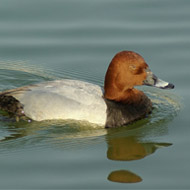
The report, compiled by the Lead Ammunition Group (LAG), suggests that lead poisoning may be affecting populations of freshwater duck, grey partridge, common buzzard and red kite. It also notes particular concern for the globally-threatened common pochard.
“Declining or recovering populations appear most sensitive to the effects of poisoning,” the report adds.
According to the British Association for Shooting & Conservation, at least 600,000 people in the UK go shooting every year. Many of these people use lead bullets to shoot, which disperse as they leave the barrel and drop to the ground. Birds then eat the particles, mistaking them for grit which they require for digestion.
Its latest Update Report, LAG cites several studies that confirm many types of non-lead bullets are effective, widely available and safer to the environment than lead ammunition. It adds that partial bans on lead ammunition, that cover only certain taxa or habitats, have proven to be ineffective.
Several international agreements have adopted Resolutions calling for governments to phase out lead ammunititon, or work towards this goal. These include the UN Convention on Migratory Species, the International Union for the Conservation of Nature, and the United Nations Environment Programme Assembly.
In 2016, mindful that lead-contaminated game can also enter the human food chain, Forest Enterprise England asked its staff to use non-lead ammunition for deer and boar culling.
"There appears to be international scientific consensus on the wildlife and human health risks associated with the use of lead ammunition and the need for a transition to non-lead alternatives; the remaining barriers are largely socio-political,” the report concludes.
LAG was established by Defra in 2010 following concerns about the impacts of lead ammunition on the health of wildlife and people. Comprising key stockholder and experts, the group explores possible solutions and advises the government accordingly.


 A nationwide roadshow offering free, personalised parasite risk assessments and flea and tick checks will be visiting popular dog events across the UK.



