


Vets call for exotic pet labelling scheme
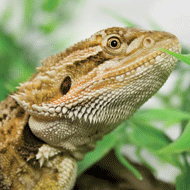
The proposed labelling scheme would require pet sellers to show how challenging exotic animals are to keep.
Vets are calling for a pet labelling scheme to help consumers make informed decisions about the types of animals they buy.
Writing in the Journal of Veterinary Behaviour, researchers highlight the growing problem of unwanted exotic pets and their mis-selling as “easy to keep” or “beginner animals”. They conclude that animal welfare has endured 'decades of suffering' as a result of the exotic pet trade being 'significantly out of reasonable control'.
“Efforts, after pet acquisition, to educate sellers and keepers to improve animal welfare and public health issues have proven unproductive,” the authors write. “We propose that a system is required that facilitates decision-making at the interface between sale and purchase sectors and that uses clear evidence-based labeling.”
The proposed labelling scheme would require pet sellers to show how challenging exotic animals are to keep by categorising them as either ‘easy, ‘moderate’, ‘difficult’ or ‘extreme’. The label would also include important public health notices, as many exotic animals carry diseases that are transmissible to humans.
Welcoming the news, the Animal Protection Agency (APA) said the scheme is much needed to ensure people don’t take on difficult or demanding pets.
"It may seem distasteful to call for labels for living, feeling animals but the problem is that they are already priced-up, packaged, marketed and often mis-labelled as ‘easy to keep' or ‘suitable for beginners’,” said Elaine Toland, director of the APA.
“This innovative scheme, based on sound, scientific information by an international group of experts, is a straightforward way of addressing irresponsible trade practices and protecting animals as well as consumers."


 Veterinary practices are being urged to help owners safely dispose of any unused and expired pet medicines - not just antibiotics - during November's Animal Medicines Amnesty.



