


Government urged to fulfil its animal welfare promises
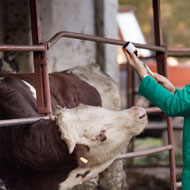
The BVA recommends the use of animal welfare stewardship programme to financially support progress in animal health and welfare.
BVA president John Fishwick has called on the government to fulfil its promises on maintaining animal health and welfare post-Brexit.
Mr Fishwick said that “Brexit provides an opportunity to review our agricultural policy” and that recognising animals as public goods “will benefit producers, consumers and wider society”.
His comments come in response to Defra’s consultation paper on the future for food farming and the environment in a green Brexit. In the paper, Defra recognises that investing in animal welfare is a ‘public good’ that could be supported by a new policy that offers payments to farmers who deliver higher welfare outcomes.
However, the BVA said that more detail is needed on how such a policy could be realised. In its response to Defra, the organisation recommends the use of animal welfare stewardship programme to financially support progress in animal health and welfare.
It suggests a programme that would be based on the principles of the environment stewardship schemes which reward land management practices that benefit the environment. It would compensate for the additional costs of improving animal welfare outcomes, alongside providing incentives to support continuing and long-term investment into these activities.
Mr Fishwick said that animal health and welfare ‘underpin’ the reputation of UK agricultural produce.
“It is essential that these are supported as public goods in agricultural policy post-Brexit in a way that can make a positive and measurable impact on animal health and welfare,” he explained.
“Vets play a crucial role in UK agriculture, right throughout the animal’s life, then from the farm-gate through to trade certification. Working towards the highest welfare standards and monitoring disease are an essential component of this, so it’s vital that the government use veterinary expertise to best effect in the development and implementation of any new policy and plans.”


 Veterinary practices are being urged to help owners safely dispose of any unused and expired pet medicines - not just antibiotics - during November's Animal Medicines Amnesty.



