
Your data on MRCVSonline
The nature of the services provided by Vision Media means that we might obtain certain information about you.
Please read our Data Protection and Privacy Policy for details.

In addition, (with your consent) some parts of our website may store a 'cookie' in your browser for the purposes of
functionality or performance monitoring.
Click here to manage your settings.
If you would like to forward this story on to a friend, simply fill in the form below and click send.

Your friend's email:
Your email:
Your name:
 
 
Send Cancel

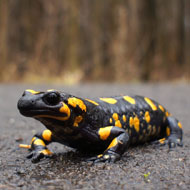
Emerging pathogen found in salamanders in the EU
Batrachochytrium salamandrivorans (Bsal) was first identified in 2013 and causes a fatal skin disease in non-resistant species.

Efsa recommendations to protect pet and wild amphibians 

An emerging fungal pathogen has been detected in captive and wild salamanders across five EU member states, a new report shows.

Batrachochytrium salamandrivorans (Bsal) was first identified in 2013 and causes a fatal skin disease in non-resistant species.

Despite limited surveillance, the pathogen has been seen in pet salamanders in the UK, Belgium, Germany, Spain and the Netherlands, according to a new report by the European Food Safety Authority (Efsa).

It has also been detected in wild populations in some parts of Belgium, Germany and the Netherlands.

As surveillance is limited, however, the pathogen could be more widely spread than currently known.

To ensure safer trade of live salamanders in the EU and internationally, Efsa suggested a potential ban or restrictions on salamander imports, though the authority noted that this could also boost the illegal trade. Other methods include hygiene procedures, good practice manuals and efforts to identify and treat infected pets.

In the wild, Efsa recommended preventing the translocation of wild amphibians, as well as the release/return to the wild of captive or temporarily housed salamanders. Contact points and emergency teams should also be set up for passive surveillance.

Other recommendations in the report include:

  • enhance surveillance
  • introduce a harmonised protocol on Bsal detection in the EU
  • raise awareness of Bsal among breeders, keepers and pet shops
  • put together guidelines on hygiene procedures
  • movements of captive salamanders should be based on health status (Bsal negative)
  • improve data on salamander abundance and distribution.

Become a member or log in to add this story to your CPD history

Animal Medicines Amnesty returns this November

News Story 1
 Veterinary practices are being urged to help owners safely dispose of any unused and expired pet medicines - not just antibiotics - during November's Animal Medicines Amnesty.


Organised by the Responsible Use of Medicines Alliance Companion Animal and Equine (RUMA CA&E), the initative is supported by a range of cross-sector organisations.

Practices are encouraged to use the campaign to engage the whole practice team and raise awareness of the safe disposal of medicines with clients. Learn how your practice can get involved at rumacae.org.uk 

Click here for more...
News Shorts
Bluetongue RZ extended across Scotland

The Scottish Government has announced an extension to a Bluetongue Restricted Zone that is in place in south-west Scotland.

From 3 October, the Restricted Zone will be extended to cover the whole of Scotland. The Animal, Plant and Health Agency (APHA) says this is in response to further disease spread, as well as simplify trading conditions ahead of the autumn.

Since the whole country will share a disease status, it will no longer be necessary to have a movement license to move susceptible livestock around the country. Restrictions on germinal products remain.

As of 1 October 2026, there were 1,979 cases of BTV-3 in England, 389 cases in Wales and 40 cases in Scotland.
