Your data on MRCVSonline
The nature of the services provided by Vision Media means that we might obtain certain information about you.
Please read our Data Protection and Privacy Policy for details.

In addition, (with your consent) some parts of our website may store a 'cookie' in your browser for the purposes of
functionality or performance monitoring.
Click here to manage your settings.
If you would like to forward this story on to a friend, simply fill in the form below and click send.

Your friend's email:
Your email:
Your name:
 
 
Send Cancel

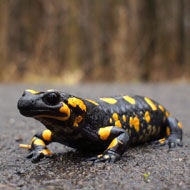
Emerging pathogen found in salamanders in the EU
Batrachochytrium salamandrivorans (Bsal) was first identified in 2013 and causes a fatal skin disease in non-resistant species.

Efsa recommendations to protect pet and wild amphibians 

An emerging fungal pathogen has been detected in captive and wild salamanders across five EU member states, a new report shows.

Batrachochytrium salamandrivorans (Bsal) was first identified in 2013 and causes a fatal skin disease in non-resistant species.

Despite limited surveillance, the pathogen has been seen in pet salamanders in the UK, Belgium, Germany, Spain and the Netherlands, according to a new report by the European Food Safety Authority (Efsa).

It has also been detected in wild populations in some parts of Belgium, Germany and the Netherlands.

As surveillance is limited, however, the pathogen could be more widely spread than currently known.

To ensure safer trade of live salamanders in the EU and internationally, Efsa suggested a potential ban or restrictions on salamander imports, though the authority noted that this could also boost the illegal trade. Other methods include hygiene procedures, good practice manuals and efforts to identify and treat infected pets.

In the wild, Efsa recommended preventing the translocation of wild amphibians, as well as the release/return to the wild of captive or temporarily housed salamanders. Contact points and emergency teams should also be set up for passive surveillance.

Other recommendations in the report include:

  • enhance surveillance
  • introduce a harmonised protocol on Bsal detection in the EU
  • raise awareness of Bsal among breeders, keepers and pet shops
  • put together guidelines on hygiene procedures
  • movements of captive salamanders should be based on health status (Bsal negative)
  • improve data on salamander abundance and distribution.

Become a member or log in to add this story to your CPD history

Building Great Workplaces webinars return

News Story 1
 BVA has announced a new series of its Building Great Workplaces lunchtime webinars.

Launching from 16 July, the sessions will explore patient safety, motivation, client communication and more.

Its first webinar, exploring neurodiversity in the workplace, will take place at 1pm on Thursday, 16 July. It will feature guest speakers from The Vet Project, a group which supports neurodiversity in veterinary environments.

The following three webinars take place in September, October and November.

Booking is open on the BVA website 

Click here for more...
News Shorts
New form for online veterinary medicines retailers

The Veterinary Medicines Directorate (VMD) has produced a new online form for retailers wishing to sell veterinary medicines on the internet.

The form replace the previous Word version and is part of the VMD's ongoing commitment to digitise its processes. Anyone retailing prescription medicines online, including POM-V, POM-VPS and NFA-VPS categories, is lawfully required to register with the VMD before trading.

The change only applies to new applicants. Retailers already listed on the VMD's Register of Online Retailers or registered under the Accredited Internet Retailer Scheme (AIRS) do not need to do anything.