
Your data on MRCVSonline
The nature of the services provided by Vision Media means that we might obtain certain information about you.
Please read our Data Protection and Privacy Policy for details.

In addition, (with your consent) some parts of our website may store a 'cookie' in your browser for the purposes of
functionality or performance monitoring.
Click here to manage your settings.
If you would like to forward this story on to a friend, simply fill in the form below and click send.

Your friend's email:
Your email:
Your name:
 
 
Send Cancel

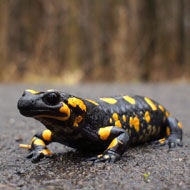
Emerging pathogen found in salamanders in the EU
Batrachochytrium salamandrivorans (Bsal) was first identified in 2013 and causes a fatal skin disease in non-resistant species.

Efsa recommendations to protect pet and wild amphibians 

An emerging fungal pathogen has been detected in captive and wild salamanders across five EU member states, a new report shows.

Batrachochytrium salamandrivorans (Bsal) was first identified in 2013 and causes a fatal skin disease in non-resistant species.

Despite limited surveillance, the pathogen has been seen in pet salamanders in the UK, Belgium, Germany, Spain and the Netherlands, according to a new report by the European Food Safety Authority (Efsa).

It has also been detected in wild populations in some parts of Belgium, Germany and the Netherlands.

As surveillance is limited, however, the pathogen could be more widely spread than currently known.

To ensure safer trade of live salamanders in the EU and internationally, Efsa suggested a potential ban or restrictions on salamander imports, though the authority noted that this could also boost the illegal trade. Other methods include hygiene procedures, good practice manuals and efforts to identify and treat infected pets.

In the wild, Efsa recommended preventing the translocation of wild amphibians, as well as the release/return to the wild of captive or temporarily housed salamanders. Contact points and emergency teams should also be set up for passive surveillance.

Other recommendations in the report include:

  • enhance surveillance
  • introduce a harmonised protocol on Bsal detection in the EU
  • raise awareness of Bsal among breeders, keepers and pet shops
  • put together guidelines on hygiene procedures
  • movements of captive salamanders should be based on health status (Bsal negative)
  • improve data on salamander abundance and distribution.

Become a member or log in to add this story to your CPD history

Defra shares new Sanitary and Phytosanitary guidance

News Story 1
 Defra has published guidance for the vet sector ahead of a proposed UK-EU Sanitary and Phytosanitary agreement.


The agreement, which will change the movement and trade of animals and related products, could see reductions in checks, paperwork and certification. As well as describing regulatory developments, the advice highlights the importance of animal ID, registration and traceability in disease control and other compliance arrangements.

The guidance can be found here. More detail is expected as negotiations progress. 

Click here for more...
News Shorts
BSAVA publishes fifth Manual of Canine and Feline Neurology

The BSAVA has published the fifth edition of its BSAVA Manual of Canine and Feline Neurology.

The new edition has been reviewed and updated, including new developments in diagnostics, therapeutic approaches and clinical decision-making. It is structured to support clinicians through diagnosis, treatment and long-term management.

The guide features five new chapters covering acute myelopathies, chronic myelopathies, emergency protocols, neurotoxicology and neuro-oncology.

It also includes over 100 videos, including demonstrations of neurological examinations, clinical presentations and diagnostic procedures.

Nicola Lloyd, publishing manager, said: "Whether you're a general practitioner seeking practical guidance, or a specialist aiming to refine your expertise, this edition remains an indispensable reference for anyone involved in the care of neurologically compromised dogs and cats."
