
Your data on MRCVSonline
The nature of the services provided by Vision Media means that we might obtain certain information about you.
Please read our Data Protection and Privacy Policy for details.

In addition, (with your consent) some parts of our website may store a 'cookie' in your browser for the purposes of
functionality or performance monitoring.
Click here to manage your settings.
If you would like to forward this story on to a friend, simply fill in the form below and click send.

Your friend's email:
Your email:
Your name:
 
 
Send Cancel

Human anti-cancer drugs could help Tasmanian devils
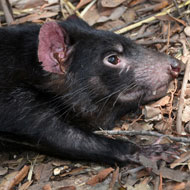
Tasmanian devils are considered endangered as a result of devil facial tumour 1.
RTKs have ‘an important role’ in sustaining transmissible cancers

Key drugs used to treat cancer in humans may also be useful in the fight against transmissible cancers in Tasmanian devils.

This is according to a new study by the University of Cambridge, which found that certain drugs used in humans were able to efficiently stop the growth of devil cancer cells in the lab.

The research, published in the journal Cancer Cell, shows that molecules known as receptor tyrosine kinases (RTKs) have an important role to play in sustaining the growth and survival of transmissible cancers in devils. Drugs targeting RTKs have already been developed for human cancers.

Tasmanian devils are considered endangered as a result of devil facial tumour 1 (DFT1), which is passed between animals through biting and causes disfiguring facial tumours. Usually fatal, DFT1 has spread throughout Tasmania since it was first seen in 1996, causing significant declines in devil populations.

Routine diagnostic screening in 2014 uncovered a second transmissible cancer in the species. With the naked eye, facial tumours caused by devil facial tumour 2 (DFT2) cannot be distinguished from those caused by DFT1, but analysis has shown they differ at a biological level.

Cambridge researchers found striking similarities between the two cancer types; in terms of genetics, tissues of origin, the way in which the cancer cells mutate and possible drug targets.

First author Dr Elizabeth Murchison said: “The story of Tasmanian devils in recent years has been a very concerning one. This study gives us optimism that anti-cancer drugs that are already in use in humans may offer a chance to assist with conservation efforts for this iconic animal.”


Become a member or log in to add this story to your CPD history

Defra shares new Sanitary and Phytosanitary guidance

News Story 1
 Defra has published guidance for the vet sector ahead of a proposed UK-EU Sanitary and Phytosanitary agreement.


The agreement, which will change the movement and trade of animals and related products, could see reductions in checks, paperwork and certification. As well as describing regulatory developments, the advice highlights the importance of animal ID, registration and traceability in disease control and other compliance arrangements.

The guidance can be found here. More detail is expected as negotiations progress. 

Click here for more...
News Shorts
BSAVA publishes fifth Manual of Canine and Feline Neurology

The BSAVA has published the fifth edition of its BSAVA Manual of Canine and Feline Neurology.

The new edition has been reviewed and updated, including new developments in diagnostics, therapeutic approaches and clinical decision-making. It is structured to support clinicians through diagnosis, treatment and long-term management.

The guide features five new chapters covering acute myelopathies, chronic myelopathies, emergency protocols, neurotoxicology and neuro-oncology.

It also includes over 100 videos, including demonstrations of neurological examinations, clinical presentations and diagnostic procedures.

Nicola Lloyd, publishing manager, said: "Whether you're a general practitioner seeking practical guidance, or a specialist aiming to refine your expertise, this edition remains an indispensable reference for anyone involved in the care of neurologically compromised dogs and cats."