
Your data on MRCVSonline
The nature of the services provided by Vision Media means that we might obtain certain information about you.
Please read our Data Protection and Privacy Policy for details.

In addition, (with your consent) some parts of our website may store a 'cookie' in your browser for the purposes of
functionality or performance monitoring.
Click here to manage your settings.
If you would like to forward this story on to a friend, simply fill in the form below and click send.

Your friend's email:
Your email:
Your name:
 
 
Send Cancel

New insights into animal domestication
“If early domestic animals lived at higher density than their wild counterparts, the likelihood of early domestic females breeding with multiple partners increased."

Changes to mating behaviour ‘enhanced domestic traits’ 

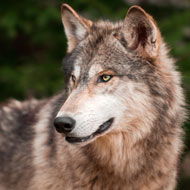
Wild animals such as wolves, pigs and cats may have become domesticated more quickly due to changes in mating behaviour, according to new research by the University of Liverpool.

Scientists say that as the animals’ population density increased in human environments, males encountered more opportunities for mating.

The benefits of pursuing these are likely to have outweighed the cost of defending access to a single mate.
 
Dr Ardern Hulme-Beaman explained: “If early domestic animals lived at higher density than their wild counterparts, the likelihood of early domestic females breeding with multiple partners increased.

“It follows that if early domestic females mated with multiple males, both wild and domestic, the more abundant and higher quality sperm of the early domestic male would out-compete the sperm of wild males.

“This could explain the reduction in transfer of genes between wild and increasingly domesticated populations.”

There are a number of advantages to polyandrous mating - for the males, it improves sperm production and quality, while for female animals, there is a benefit to their fitness and a reduction in unwanted advances.

Researchers say this prompts a rapid change in reproductive traits and competitive fertility and could explain why domesticated animals show “dramatically different social behaviours” to their wild ancestors.

Whilst the research team accepts that the main driving force behind the domestication of wild animals is habitat preference and human selection, further research could improve understanding of how changes in mating behaviour contributed to this process.  
 

Become a member or log in to add this story to your CPD history

New RCVS Academy courses to remove barriers in vet care

News Story 1
 The RCVS Academy has launched two courses to its new client support series, as it seeks to improve accessibility in veterinary settings.

The courses will help professionals to support assistance dog partnerships and clients with hearing loss.

The Hearing loss and Assistance dogs courses saw RCVS project lead Catherine Hemingway collaborate with the British Deaf Association and Assistance Dogs UK. Vets will gain practical guidance on supporting clients with additional needs.

Each course takes an hour to complete, and can be accessed by RCVS registrants for free. 

Click here for more...
News Shorts
APHA launches free virtual work experience programme

The Animal and Plant Health Agency (APHA), in collaboration with Springpod, has launched a free virtual work experience programme, giving young people across the UK the chance to explore careers dedicated to protecting animal and plant health.

The on-demand programme offers a unique insight into career opportunities within APHA, showcasing how students can contribute to tackling some of the UK's most critical biosecurity and environmental challenges.

Designed for students aged 13 and over, the course includes more than 10 hours of engaging content featuring real-life industry insights, scenario-based challenges, and practical guidance on applying for jobs. To register for the course, visit the APHA website.

