
Your data on MRCVSonline
The nature of the services provided by Vision Media means that we might obtain certain information about you.
Please read our Data Protection and Privacy Policy for details.

In addition, (with your consent) some parts of our website may store a 'cookie' in your browser for the purposes of
functionality or performance monitoring.
Click here to manage your settings.
If you would like to forward this story on to a friend, simply fill in the form below and click send.

Your friend's email:
Your email:
Your name:
 
 
Send Cancel

Figures show further reduction in campylobacter levels
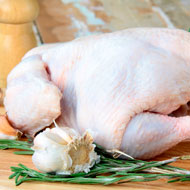
An average of 4.5 per cent of chickens tested positive for the highest level of campylobacter contamination.
Retailers publish their testing results for October to December 2017

The Food Standards Agency (FSA) has thanked retailers for their work to reduce campylobacter levels in chicken.

Nine top retailers in the UK have published their testing results on campylobacter contamination in fresh whole chickens for the period October to December 2017.

The figures show that an average of 4.5 per cent of chickens tested positive for the highest level of campylobacter contamination (those carrying more than 1,000 colony-forming units per gram cfu/g). In the previous quarter (July to September), the figure for the highest level of contamination was 5.1 per cent - a fall of more than 0.6 per cent.

The FSA says that the fall builds on results released by retailers in November 2017, with the overall trend continuing to show a reduction in the highest levels of contamination.

“It’s good to see that levels of campylobacter found continue on a downward trend. We will continue to monitor the results and procedures of the major retailers and encourage them to maintain the significant progress made so far,” said FSA director of policy and science, Michael Wright.

“We would like to thank the British Retail Consortium and the retailers for continuing to take the issue of campylobacter seriously and for working together to coordinate the publication of their results. We are actively working across smaller poultry businesses so that they can also contribute to reducing campylobacter levels.”

The FSA has been testing chicken for campylobacter since February 2014 as part of a campaign to bring together the whole food chain to tackle the problem. In September 2017, the organisation announced that retailers would be carrying out their own sampling and publishing their results under strict protocols set out by the FSA.

The nine retailers that submitted their campylobacter results were Aldi, Asda, Co-op, Lidl, Marks & Spencer, Morrisons, Sainsbury’s, Tesco and Waitrose.

Become a member or log in to add this story to your CPD history

FIVP publishes CMA Compliance Checklist

News Story 1
 FIVP has published a CMA Compliance Checklist to support independent practices with the Market Investigation Order.

The document includes deadlines for small and large businesses, with tick boxes for each of the tasks. The organisation also invites practices to contact them for support with requirements.

Rita Dingwall, FIVP chair, said: FIVP appreciates that navigating the new CMA requirements can feel daunting. We hope this checklist will make things a little easier, helping independent practices work through what is required with confidence. 

Click here for more...
News Shorts
APHA launches free virtual work experience programme

The Animal and Plant Health Agency (APHA), in collaboration with Springpod, has launched a free virtual work experience programme, giving young people across the UK the chance to explore careers dedicated to protecting animal and plant health.

The on-demand programme offers a unique insight into career opportunities within APHA, showcasing how students can contribute to tackling some of the UK's most critical biosecurity and environmental challenges.

Designed for students aged 13 and over, the course includes more than 10 hours of engaging content featuring real-life industry insights, scenario-based challenges, and practical guidance on applying for jobs. To register for the course, visit the APHA website.

