


Figures show further reduction in campylobacter levels
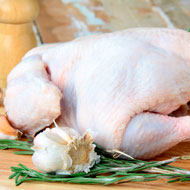
An average of 4.5 per cent of chickens tested positive for the highest level of campylobacter contamination.
The Food Standards Agency (FSA) has thanked retailers for their work to reduce campylobacter levels in chicken.
Nine top retailers in the UK have published their testing results on campylobacter contamination in fresh whole chickens for the period October to December 2017.
The figures show that an average of 4.5 per cent of chickens tested positive for the highest level of campylobacter contamination (those carrying more than 1,000 colony-forming units per gram cfu/g). In the previous quarter (July to September), the figure for the highest level of contamination was 5.1 per cent - a fall of more than 0.6 per cent.
The FSA says that the fall builds on results released by retailers in November 2017, with the overall trend continuing to show a reduction in the highest levels of contamination.
“It’s good to see that levels of campylobacter found continue on a downward trend. We will continue to monitor the results and procedures of the major retailers and encourage them to maintain the significant progress made so far,” said FSA director of policy and science, Michael Wright.
“We would like to thank the British Retail Consortium and the retailers for continuing to take the issue of campylobacter seriously and for working together to coordinate the publication of their results. We are actively working across smaller poultry businesses so that they can also contribute to reducing campylobacter levels.”
The FSA has been testing chicken for campylobacter since February 2014 as part of a campaign to bring together the whole food chain to tackle the problem. In September 2017, the organisation announced that retailers would be carrying out their own sampling and publishing their results under strict protocols set out by the FSA.
The nine retailers that submitted their campylobacter results were Aldi, Asda, Co-op, Lidl, Marks & Spencer, Morrisons, Sainsbury’s, Tesco and Waitrose.


 A nationwide roadshow offering free, personalised parasite risk assessments and flea and tick checks will be visiting popular dog events across the UK.



