
Your data on MRCVSonline
The nature of the services provided by Vision Media means that we might obtain certain information about you.
Please read our Data Protection and Privacy Policy for details.

In addition, (with your consent) some parts of our website may store a 'cookie' in your browser for the purposes of
functionality or performance monitoring.
Click here to manage your settings.
If you would like to forward this story on to a friend, simply fill in the form below and click send.

Your friend's email:
Your email:
Your name:
 
 
Send Cancel

Local abattoir network verging on collapse, report finds
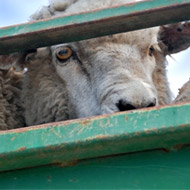
The closure of local abattoirs is bad for animal welfare and bad for the environment.
Closures mean livestock has to be transported further for slaughter

The UK’s network of small local abattoirs is verging on collapse, according to a report by the Sustainable Food Trust (SFT).

The organisation says that unless the government takes urgent action, consumer choice will suffer because the marketing of locally-produced, traceable meat will no longer be feasible. This is because of the closure of many smaller, local abattoirs and the cost of transporting livestock further for slaughter.

According to the report, the number of small abattoirs in England has declined by 34 per cent in the last decade, from 96 to 63. Reasons for the closures include a high burden of regulation, falling cattle numbers and the low and sometimes negative profitability on the sector.

In response to its findings, the SFT has made three recommendations regarding the current crisis:

    •    a government statement of support recognising the importance of local meat processing plants

    •    the introduction of mobile red meat abattoirs to enable on-farm slaughtering in an economically viable way

    •    the establishment of an independent task force to undertake an urgent review to establish why small abattoirs are closing.

Richard Young, policy director of the SFT and co-author of the report, said that local abattoirs play a vital role in all rural communities where farm animals are kept.

“When they close, both animals and meat have to be transported much further. This is bad for animal welfare and bad for the environment. It also threatens the ongoing renaissance of local food cultures,” he said.

Phil Stocker, chief executive of the National Sheep Association added: “This timely report draws attention to the rapidly changing and complex crisis facing smaller local abattoirs and those who depend on them. I truly hope that government and industry will work together to offer a long-term future for our diminishing network of local abattoirs before it is too late.”

Become a member or log in to add this story to your CPD history

FIVP publishes CMA Compliance Checklist

News Story 1
 FIVP has published a CMA Compliance Checklist to support independent practices with the Market Investigation Order.

The document includes deadlines for small and large businesses, with tick boxes for each of the tasks. The organisation also invites practices to contact them for support with requirements.

Rita Dingwall, FIVP chair, said: FIVP appreciates that navigating the new CMA requirements can feel daunting. We hope this checklist will make things a little easier, helping independent practices work through what is required with confidence. 

Click here for more...
News Shorts
APHA launches free virtual work experience programme

The Animal and Plant Health Agency (APHA), in collaboration with Springpod, has launched a free virtual work experience programme, giving young people across the UK the chance to explore careers dedicated to protecting animal and plant health.

The on-demand programme offers a unique insight into career opportunities within APHA, showcasing how students can contribute to tackling some of the UK's most critical biosecurity and environmental challenges.

Designed for students aged 13 and over, the course includes more than 10 hours of engaging content featuring real-life industry insights, scenario-based challenges, and practical guidance on applying for jobs. To register for the course, visit the APHA website.

