


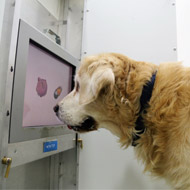
Researchers train elderly pets to play 'sudoku'
Computer games for dogs could help to slow down mental deterioration, a new study has found.
The research was led by cognitive biologists from Vetmeduni Vienna, who propose computer interaction as a practical alternative to physical training. In the study, elderly dogs responded positively to interactive touchscreen games, including 'dog suduko'.
Researchers say that simple, mental computer tasks, followed by a reward, could replace physically demanding training and still keep animals mentally fit. They now aim to take 'dog sudoku' out of the laboratory and into people’s living rooms.
“The positive feeling created by solving a mental challenge is comparable to the feeling that older people have when they learn something new, doing something they enjoy,” explains senior author Ludwig Huber. “Regular brain training shakes not only us but also dogs out of their apathy in old age, increasing motivation and engagement and thus maximising learning opportunities.”
Puppies are typically socialised and challenged using an array of training methods. But as dogs get older, we increasingly - and unconsciously - reduce the level of regular training and challenges.
First author Lisa Wallis said that by reducing the level of training, we actually restrict opportunities to create positive mental experiences for our dogs:
“As is the case with people, dopamine production in dogs also falls in old age, leading to memory decline and motivational drive. But this natural mental deterioration can be countered with the specific training of cognitive skills,” she said.
The training works by using computer-based brain-teasers. While it took some time preparing the dogs for the games, they soon turned into avid gamers once they got the hang of it.
“Touchscreen interaction is usually analysed in young dogs. But we could show that old dogs also respond positively to this cognitive training method,” says senior author Ludwig Huber. “Above all, the prospect of a reward is an important factor to motivate the animals to do something new or challenging.”
Image (C) Messerli Research Institute/Vetmeduni Vienna.


 Two independent vets have launched a podcast to help owners strengthen their bond with pets. Dr Maggie Roberts and Dr Vanessa Howie, who have worked in both veterinary practice and major charities, are keen to use their experience to enable people to give pets a better life.



