


Vets and pet owners to deliver petition in protest of new position statement
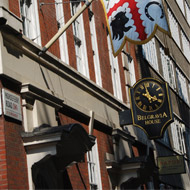
Homeopathy supporters will be marching to the RCVS headquarters on Monday (15 January) to deliver a petition in protest to the College’s new position statement on complementary therapies.
The march has been organised by the British Association of Homeopathic Veterinary Surgeons (BAHVC), which has been campaigning for the College to retract its statement on the use of complementary and alternative medicine (CAM). This includes homeopathy, which it says is a de facto ban.
Vets, animal lovers and their pets are planning to meet outside the Houses of Parliament and will then march towards the RCVS headquarters in Horseferry Road.
In November 2017, the RCVS updated its position statement on homeopathy to say that complementary and alternative therapies must not delay or replace treatments that are based on sound scientific evidence. The statement read:
‘Homeopathy exists without a recognised body of evidence for its use. Furthermore, it is not based on sound scientific principles…it is vital to protect the welfare of animals committed to the care of the veterinary profession and the public’s confidence in the profession that any treatments not underpinned by a recognised evidence base or sound scientific principles do not delay or replace those that do.’
A petition calling for the RCVS to retract its statement has garnered support from more than 13,000 people.
BAHVS President Chris Day said: “This is an attack on freedom of choice for clients and on clinical freedom of vets. It has been imposed without consultation with clients or any of the vets who use these treatments.
“We are deeply disappointed that the RCVS would seek to undermine its own members whose independence and livelihoods are at stake.”
The RCVS stressed that it has not banned veterinary homeopathy and neither does its position statement suggest that it has. ‘We expect treatments like homeopathy, which are not underpinned by a recognised evidence base or sound scientific principles, to be offered alongside, or complementary to, those treatments that are,’ it said.
Image (C) RCVS


 Veterinary practices are being urged to help owners safely dispose of any unused and expired pet medicines - not just antibiotics - during November's Animal Medicines Amnesty.



