
Your data on MRCVSonline
The nature of the services provided by Vision Media means that we might obtain certain information about you.
Please read our Data Protection and Privacy Policy for details.

In addition, (with your consent) some parts of our website may store a 'cookie' in your browser for the purposes of
functionality or performance monitoring.
Click here to manage your settings.
If you would like to forward this story on to a friend, simply fill in the form below and click send.

Your friend's email:
Your email:
Your name:
 
 
Send Cancel

Racing authority amends rules on influenza vaccine
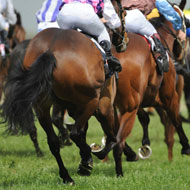
All horses that enter the racecourse must have been vaccinated against equine influenza by a veterinary surgeon.
New rule also added on extracorporeal shockwave therapy

The British Horseracing Authority (BHA) is alerting horse owners, trainers and veterinary surgeons of two important changes to its rules of racing.

Rule (E) 18 has been amended so that horses will not be permitted to run in the event of a failure to comply with any of the requirements for vaccinations against equine influenza.  

Under the BHA’s rules of racing, all horses that enter the racecourse must have been vaccinated against equine influenza by a veterinary surgeon, to control infectious disease and protect equine welfare.

Currently, in the event of non-compliance, the horse may not be permitted to run unless it has, in the opinion of the veterinary officer, received at least a vaccination against equine influenza. The BHA says this effectively permits horses to run when they have not been vaccinated correctly, which could present a risk to other horses at the site.

The rule is now worded:
'18.7 In the event of failure to comply with any of the requirements of this Rule in respect of a horse which is on Racecourse Property
'18.7.1., unless the Stewards have given their permission the horse will not be permitted to run in any race; and
'18.7.2 the Trainer or the Owner of the horse are liable to Disciplinary Action'.

In addition, the BHA has introduced a new rule that will require horses to be stood down from racing for five days after extra-corporeal shockwave therapy.

ESWT is used in equine orthopaedics to treat a number of conditions, and involves directing shock waves onto the injured area.

The new rule is worded: '11.C The horse must not have been administered extracorporeal shockwave therapy (ESWT) on the day of the race or on any of the five days before the day of the race in which the horse is declared to run.'

Become a member or log in to add this story to your CPD history

FIVP publishes CMA Compliance Checklist

News Story 1
 FIVP has published a CMA Compliance Checklist to support independent practices with the Market Investigation Order.

The document includes deadlines for small and large businesses, with tick boxes for each of the tasks. The organisation also invites practices to contact them for support with requirements.

Rita Dingwall, FIVP chair, said: FIVP appreciates that navigating the new CMA requirements can feel daunting. We hope this checklist will make things a little easier, helping independent practices work through what is required with confidence. 

Click here for more...
News Shorts
APHA launches free virtual work experience programme

The Animal and Plant Health Agency (APHA), in collaboration with Springpod, has launched a free virtual work experience programme, giving young people across the UK the chance to explore careers dedicated to protecting animal and plant health.

The on-demand programme offers a unique insight into career opportunities within APHA, showcasing how students can contribute to tackling some of the UK's most critical biosecurity and environmental challenges.

Designed for students aged 13 and over, the course includes more than 10 hours of engaging content featuring real-life industry insights, scenario-based challenges, and practical guidance on applying for jobs. To register for the course, visit the APHA website.

