
Your data on MRCVSonline
The nature of the services provided by Vision Media means that we might obtain certain information about you.
Please read our Data Protection and Privacy Policy for details.

In addition, (with your consent) some parts of our website may store a 'cookie' in your browser for the purposes of
functionality or performance monitoring.
Click here to manage your settings.
If you would like to forward this story on to a friend, simply fill in the form below and click send.

Your friend's email:
Your email:
Your name:
 
 
Send Cancel

Defra backs tougher rules on neonicotinoids
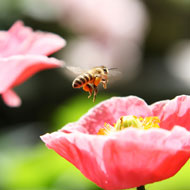
A growing body of scientific evidence shows neonicotinoids are harmful to bees and other pollinators.
Scientific evidence ‘justifies further restrictions’ - Gove 

Environment secretary Michael Gove has said the UK will support tougher restrictions on the use of neonicotinoids, as a growing body of scientific evidence shows they are harmful to bees and other pollinators.

There is currently an EU-wide ban on the use of three neonicotinoids (clothianidin, imidacloprid and thiamethoxam) on a number of crops that are attractive to bees, such as oilseed rape.

The European Commission has proposed to further restrict these pesticides, so they can only be used on plants in glasshouses. Currently their use is allowed for treating sugar beet and as seed treatment for winter cereals.

Mr Gove said tougher restrictions are justified by scientific evidence on the risks posed to the environment and pollinators. Unless the evidence changes, the government will maintain these restrictions after Brexit.

The move follows advice from the government’s advisory body on pesticides.

“I’ve always been clear I will be led by the science on this matter,” Mr Gove said. “The weight of evidence now shows the risks neonicotinoids pose to our environment, particularly to the bees and other pollinators which play such a key part in our £100 billion food industry, is greater than previously understood.

“I believe this justifies further restrictions on their use. We cannot afford to put our pollinator populations at risk.”

Mr Gove added that he understands the impact that further restrictions will have on farmers and is keen to work with them to investigate alternative approaches.

If the European Commission’s proposal is adopted, the UK would be able to consider emergency authorisations in exceptional circumstances, when the risk to pollinators is sufficiently low.

Become a member or log in to add this story to your CPD history

Equine Disease Surveillance report released for Q4 2025

News Story 1
 The latest Equine Disease Surveillance report has been released, with details on equine disease from Q4 of 2025.

The report, produced by Equine Infectious Disease Surveillance, includes advice on rule changes for equine influenza vaccination.

Statistics and maps detail recent outbreaks of equine herpes virus, equine influenza, equine strangles and equine grass sickness. A series of laboratory reports provides data on virology, bacteriology, parasitology and toxicosis.

This issue also features a case study of orthoflavivus-associated neurological disease in a horse in the UK. 

Click here for more...
News Shorts
RCVS annual renewal fee for vets due

RCVS' annual renewal fee for veterinary surgeons is now due. Vets must pay their renewal fee before Wednesday, 1 April 2026.

This year's standard annual fee has increased to 431 from last year's 418. This is an approximately three per cent increase, as approved by RCVS Council and the Privy Council.

Tshidi Gardner, RCVS treasurer, said: "The small fee increase will be used to help deliver both our everyday activities and our new ambitious Strategic Plan, which includes aims such as achieving new legislation, reviewing the Codes of Professional Conduct and supporting guidance, and continuing to support the professions through activities such as the Mind Matters Initiative, RCVS Academy and career development."

A full breakdown of the new fees is on the RCVS website. Information about tax relief is available on the UK government website.

