


Goldfish ‘make alcohol to survive harsh conditions’
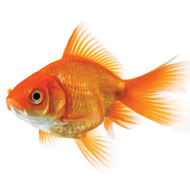
Goldfish and crucian carp can survive for long periods in oxygen-free water under ice.
Goldfish and their wild relatives are able to produce alcohol to survive for days or even months at the bottom of frozen lakes or ponds. Now, scientists say they have unlocked their secret.
Humans and most other vertebrates die within a few minutes without oxygen. Goldfish and crucian carp, however, can survive for long periods in oxygen-free water under ice.
During this time, they convert anaerobically-produced lactic acid into ethanol, which diffuses across their gills into the surrounding water and avoids the fatal build up of lactic acid in the body.
New research in Scientific Reports shows that the muscles of these fish contain not one, but two sets of the proteins that are used to channel carbohydrates towards their breakdown within a cell’s mitochondria.
One set of these proteins appears to be similar to that in other species, but the second set is strongly activated by the absence of oxygen. It shows a mutation that allows metabolic substrates to be channelled to ethanol formation outside the mitochondria.
Genetic analysis suggests these two sets of proteins arose some eight million years ago, as part of a whole genome duplication event in a common ancestor of goldfish and crucian carp.
Lead author Dr Cathrine Elisabeth Fagernes said this allows crucian carp to avoid competition and preadtion by other species, as they are uniquely able to survive and exploit harsh environments.
“It’s no wonder then that the crucian carp’s cousin, the goldfish, is arguably one of the most resilient pets under human care,” she said.
Dr Michael Berenbrink at the University of Liverpool added: “During their time in oxygen-free water in ice-covered ponds, which can last for several months in their northern European habitat, blood alcohol concentrations in crucian carp can reach more than 50 mg per 100 millilitres, which is above the drink drive limit in these countries.
“However, this is still a much better situation than filling up with lactic acid, which is the metabolic end product for other vertebrates, including humans, when devoid of oxygen.”


 Two independent vets have launched a podcast to help owners strengthen their bond with pets. Dr Maggie Roberts and Dr Vanessa Howie, who have worked in both veterinary practice and major charities, are keen to use their experience to enable people to give pets a better life.



