


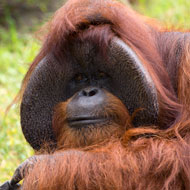
A male orang-utan known for his ability to use American sign language (ASL) has died at the age of 39. Zoo Atlanta, where he had lived for 20 years, said the great ape will be sadly missed.
Chantek was born at the Yerkes Language and Research Centre in December 1977. After arriving at Zoo Atlanta in 1997, he frequently used ASL to communicate with his caregivers, with whom he developed close personal bonds. However, he was shy about signing with strangers, choosing instead to communicate in ways that are more typical for orang-utans, such as vocalisations and hand gestures.
As well as forming strong attachments to zoo keepers, Chantek also had close relationships with the other orang-utans in his group, and especially enjoyed playing with the younger apes.
Announcing his passing, Hayley Murphy, vice president of animal divisions, said: “Chantek will be deeply missed by his family here at Zoo Atlanta. He had such a unique and engaging personality and special ways of relating to and communicating with those who knew him best.
“It has been our privilege to have had him with us for 20 years and to have been given the opportunity to offer him a naturalistic environment where he could get to know and live with his orang-utan family.”
Chantek died on 7 August and while the cause of death is not yet known, the results of a necropsy are expected in several weeks. The zoo’s animal care and veterinary teams had been treating Chantek for progressive heart disease. He participated in the world’s first voluntary echocardiogram ever performed with a conscious orang-utan. He also took part in voluntary cardiac ultrasounds, blood pressure readings and blood tests to monitor his health.
Cardiac disease is a primary cause of mortality among great apes in zoological populations. The Great Ape Heart Project, which is based at Zoo Atlanta, is the first coordinated clinical approach to targeting and treating the disease in gorillas, orang-utans, chimpanzees and bonobos. The insights gained through close monitoring of Chantek’s heart health will benefit the care and health of orang-utans and other apes around the world.
Image © Zoo Atlanta


 Defra has published guidance for the vet sector ahead of a proposed UK-EU Sanitary and Phytosanitary agreement.



