


Innovative design makes scanning equines less complicated
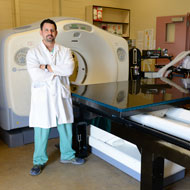
US veterinary technician Jason Peters has developed a new, state-of-the-art CT table for large animal patients, to overcome difficulties scanning equines.
Performing a CT scan on a horse previously required a team of nearly a dozen technicians and veterinary surgeons, in addition to forklifts and cranes. The previous CT table at UC Davis School of Veterinary Medicine had been in use for three decades, but when they began looking for a new large animal table, it became apparent that they could not purchase a pre-built table due to the room configuration.
After discussing materials that could be used for the project, the team settled on carbon fibre - a new-age material that can be folded to take any shape and strength. It is used in many applications in NASA’s space program because of its strength-to-weight ratio, high stiffness, chemical resistance and temperature tolerance. The material is also used in sports cars such as Ferraris and Lamborghinis, as well as motorcycles, bicycles and sail boats.
However, moulding the material correctly is crucial for ensuring its strength. Mr Peters worked with a carbon fibre manufacturer that specialises in automotive parts, using plans developed with the UC Davis College of Engineering. Together, they created a table that weighs just 100lb, but can take up to 10,000lb in any area. The old table weighs nearly twice as much and is not nearly as strong, according to the university.
Additionally, the horse can remain stationary and the new table can be moved into position if, for example, the horse needed its front and hind legs scanned. Previously, technicians would have had to physically reposition the horse.
Extension plates were also made to provide an extra surface for anatomy that does not fit on the main table.
Photo courtesy of UC Davis


 Companies marketing medicines for small pets exempt from authorisation must submit their annual return to the Veterinary Medicines Directorate (VMD) by 30 November 2026.



