
Your data on MRCVSonline
The nature of the services provided by Vision Media means that we might obtain certain information about you.
Please read our Data Protection and Privacy Policy for details.

In addition, (with your consent) some parts of our website may store a 'cookie' in your browser for the purposes of
functionality or performance monitoring.
Click here to manage your settings.
If you would like to forward this story on to a friend, simply fill in the form below and click send.

Your friend's email:
Your email:
Your name:
 
 
Send Cancel

Zika in primates ‘raises risk of human outbreaks’
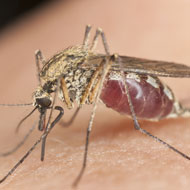
Mosquito
Zika is spread by the bite of an infected Aedes mosquito.

Experts assess likelihood of disease entering primate populations

The Zika virus could be transmitted to primates in areas where Zika infections are prevalent, a leading expert has warned.

According to ScienceNews, disease ecologist Barbara Han said that if Zika spreads to primates, the animals could serve as a reservoir for human outbreaks.

This would make it almost impossible to get rid of the virus, she cautioned.

Ms Han was speaking at the American Society for Microbiology Biothreats meeting, which took place in Washington (6-8 February). She and her colleagues assessed the likelihood of Zika entering primate populations in South America using criteria such as body size, diet and species range.

On their list of at-risk species is the black-striped capuchin monkey and the common marmoset - both of which have already tested positive for Zika virus matching the human strain.

‘The finding indicates the spill-back has already started,’ reports ScienceNews.

Capuchin monkeys are particularly at risk, experts say, due to their close proximity with humans. 

Zika is spread by the bite of an infected Aedes mosquito and can be passed from a pregnant women to her foetus. Infections during pregnancy can lead to serious birth defects, such as an abnormally small head. 

In November, the World Health Organisation declared that Zika was no longer a global emergency. However, Zika virus and its associated consequences still remain a significant challenge to public health.

 

Become a member or log in to add this story to your CPD history

Animal Medicines Amnesty returns this November

News Story 1
 Veterinary practices are being urged to help owners safely dispose of any unused and expired pet medicines - not just antibiotics - during November's Animal Medicines Amnesty.


Organised by the Responsible Use of Medicines Alliance Companion Animal and Equine (RUMA CA&E), the initative is supported by a range of cross-sector organisations.

Practices are encouraged to use the campaign to engage the whole practice team and raise awareness of the safe disposal of medicines with clients. Learn how your practice can get involved at rumacae.org.uk 

Click here for more...
News Shorts
APHA launches free virtual work experience programme

The Animal and Plant Health Agency (APHA), in collaboration with Springpod, has launched a free virtual work experience programme, giving young people across the UK the chance to explore careers dedicated to protecting animal and plant health.

The on-demand programme offers a unique insight into career opportunities within APHA, showcasing how students can contribute to tackling some of the UK's most critical biosecurity and environmental challenges.

Designed for students aged 13 and over, the course includes more than 10 hours of engaging content featuring real-life industry insights, scenario-based challenges, and practical guidance on applying for jobs. To register for the course, visit the APHA website.
