


Study reveals insights into sheep scab treatment
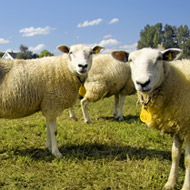
The study found that farmers living in Scotland, North England and Wales should use preventative sheep treatment for sheep scab.
It is only cost-effective for farmers to use preventative treatment for sheep scab in areas where risk is highest, according to new research.
The study, published in the journal Preventative Veterinary Medicine, suggests that farmers living in Scotland, North England and Wales should use preventative treatment, as well as those where high-risk grazing strategies are used.
In other areas, the study found that it is more cost-effective for farmers to only pay to treat if and when their flock gets scab.
"Farmers will not treat preventatively when it is not in their economic interest to do so. To achieve national reductions in scab incidence, approaches that give farmers an economic incentive to use preventative treatment will need to be adopted,” said lead researcher, Emily Nixon.
Before 1992, farmers were required by law to treat all their sheep for scab - at that time there were only around 40 outbreaks a years. When compulsory treatment was removed, however, the number of scab outbreak in the UK rose significantly. According to the University of Bristol, there are now 5,000 - 10,000 outbreaks each year, costing the industry around £10m.
While there have been many industry initiatives to reduce the incidence of scab, the failure to reduce numbers is frequently blamed on farmers who are unwilling to use preventative treatments.
Together with her colleagues, Emily set out to show if it is financially better for a farmer to treat scab before sheep are infected, or whether it is worth risking and only treating if the flock develops scab.
Though analysing information on the losses and treatment costs - together with the risk of scab - she found that there is not just one blanket strategy that works for all farmers.
She concludes that tailoring strategies to specific regions or farms could help to ensure that farmers do not lose out.


 Two independent vets have launched a podcast to help owners strengthen their bond with pets. Dr Maggie Roberts and Dr Vanessa Howie, who have worked in both veterinary practice and major charities, are keen to use their experience to enable people to give pets a better life.



