


Thousands back #EndBSL campaign
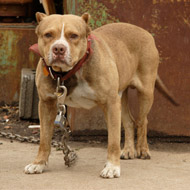
Section 1 of the Dangerous Dogs Act uses BSL to ban pit bull terriers.
Over 50,000 people have signed a petition calling for an end to Breed Specific Legislation (BSL).
Launched in August 2016, the petition was organised by the RSPCA and has been backed by organisations and individuals across the world.
The campaign calls on the government to hold a public inquiry into Section 1 of the Dangerous Dogs Act, which uses BSL to ban pit bull terriers, fila Brazilieros, Japanese tosas, and dogo Argentinos.
“Our message is simple: BSL is ineffective in protecting public safety and results in the suffering and euthanasia of many dogs,” explains RSPCA dog welfare expert Dr Samantha Gaines - lead author of the charity’s BSL report ‘A Dog’s Dinner’.
“Since publishing our report and launching our campaign in August - marking 25 years since the Dangerous Dogs Act was implemented - we’ve received support from around the world, not only from members of the public, dog lovers and people who have experienced the devastating effects of BSL first-hand, but also from other UK and international organisations, charities and bodies.”
More than 30 animal and veterinary organisations have backed the campaign, including the Dutch Veterinary Behaviour Group, Eurogroup for Animals, and the International Association of Animal Behaviour Consultants.
Dr Valerie Jonckheer-Sheehy, chair of the Dutch Veterinary Behaviour Group, said that BSL will not resolve dog bite incidents.
“The focus must be on educating the public on dog behaviour and welfare, and ensuring that dog breeders breed healthy animals who are able to cope with the mental demands that they may be challenged within their day-to-day life,” she said.
In December, the London Assembly agreed to support a motion for the Mayor of the city to write to the Secretary of State for Environment, Food & Rural Affairs requesting an inquiry into the law.
“Hopefully, with the support of these wonderful organisations and the backing of tens of thousands of voices, we stand a chance of getting the Government to sit up and listen,” said Dr Gaines.
“It’s high time we made a change that will not only make the public in the UK safer but will also ensure dogs are not punished for simply looking a certain way.”


 Defra has published guidance for the vet sector ahead of a proposed UK-EU Sanitary and Phytosanitary agreement.



