


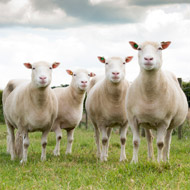
Dolly's siblings celebrate ninth birthday
Four clones derived from the same cell line as Dolly the sheep have reached their ninth birthday in good health, according to the University of Nottingham.
Dolly's 'siblings' - Denise, Debbie, Daisy, and Dianna - have just celebrated their birthdays. Together with nine other clones, they make up a unique flock of genetically identical sheep under the care of Professor Kevin Sinclair, an expert in developmental biology.
Now research published in the journal Natural Communications reveals that between seven and nine years of age, these cloned sheep showed no long-term detrimental health effects. The research is the first detailed and comprehensive assessment of age-related non-communicable disease in cloned offspring.
Dolly the sheep went down in history as the first animal to be cloned from an adult cell using a technique called somatic-cell nuclear transfer (SCNT). Until now, healthy ageing of SCNT has never been properly investigated.
"There have been no detailed studies of their health," explained Prof. Sinclair. "One of the concerns in the early days was that cloned offspring were ageing prematurely and Dolly was diagnosed with osteoarthritis at the age of around five, so clearly this was a relevant area to investigate."
In the study, the researchers conducted detailed assessments for glucose tolerance, insulin sensitivity and blood pressure. The flock also received a full musculoskeletal examination, radiological examinations of all main joints and MRI scans of their knees. The flock's health was then compared with a group of naturally bred six-year-old sheep living in similar conditions at the University.
Despite the age of the sheep, the team found no signs of diabetes, high blood pressure, of clinical degenerative joint disease. Some of the animals did show evidence of mild osteoarthritis - particularly Debbie who had moderate osteoarthritis. None of the animals were lame, however, nor did they require any treatment.
The team say that while there is still a long way to go before SCNT is perfected, their research shows that cloned animals can lead long and healthy lives.
Image (C) University of Nottingham


 Veterinary practices are being urged to help owners safely dispose of any unused and expired pet medicines - not just antibiotics - during November's Animal Medicines Amnesty.



