


Researchers develop new horse behaviour software
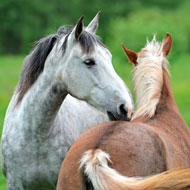
Animal-computer Interaction (ACI) is an emerging scientific discipline that looks at the relationship between technology and animals.
Computer software that could tell us what a horse is thinking and feeling is being developed by experts at the University of Nottingham.
The Horse Automated Behaviour Tool (HABIT) aims to automatically identify behaviour horses are exhibiting, and tell us whether they are sick, stressed or suffering.
Researchers say the equipment could help us to understand behaviour and offer insights into how we can improve our communication with animals.
“Horses and all nonhuman animals are entitled to interaction technologies that enrich rather than exploit,” said software developer Dr Steve North.
“Anthropocentrism limits our understanding of human interaction in a multi-species world and currently there isn’t any software that can reliably analyse video footage and log what behaviours it sees and when. We hope HABIT will also be able to assess how animals react to new surroundings.”
Animal-computer Interaction (ACI) is an emerging scientific discipline that looks at the relationship between technology and animals.
The project, which has received funding from the University’s Mixed Reality Laboratory, brings together experts in animal computer interaction, equitation science, ethology, animal behaviour and biomedical engineering.
“It is really important that our vet students can interpret what an animal is telling you through its body language,” said Dr Mandy Roshier, an expert in anatomy and behaviour at the University’s School of Veterinary Medicine and Science.
“This can go some way to understanding its emotional state. Using equipment that can help us measure and understand behaviour would provide important insights into how we can communicate with animals more.”

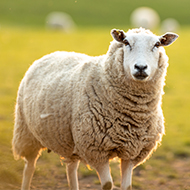
 Livestock keepers are being urged to stay vigilant for Bluetongue (BTV-3) following confirmation of the disease in a ewe. The case, confirmed in Staffordshire on 23 June 2026, represents the first confirmed case of infection this summer.



