


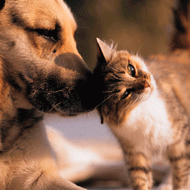
Organisation proposes Action Plan for better legislation
An event was held by the EU Dog & Cat Alliance earlier this week to urge the EU to take action on the welfare of dogs and cats involved in commercial practices.
Around 60 organisations from 20 member states attended the event, which proposed an EU Action Plan for more robust and better-implemented legislation.
The Alliance called for a compulsory database, compulsory licensing for breeders, tighter controls on the internet trade, and concrete action to prevent zoonoses and improve consumer protection.
Paula Boyden, Dogs Trust veterinary director and spokesperson for the EU Dog & Cat Alliance, explains: “Thousands of puppies and kittens bred for illegal sale in the EU endure horrendous breeding and transport conditions often resulting in severe, chronic health problems.
“The Alliance is calling for an EU Action Plan to tackle this illegal trade, with three main priorities: consumer protection, public and animal health, and animal welfare. All three are imperative to the protection of the internal market."
She added: "Compulsory database would be another vital tool which would facilitate the exchange of basic information such as the age of the animal, microchip number and country of origin to allow traceability. This would help prevent the suffering of these animals and address issues related to consumer protection."
Hosted by MEP Daniel Dalton, the event was based on the findings of the recently published study on the welfare of dogs and cats involved in commercial practices.
The study provides evidence as to why the breeding and trade of dogs and cats is crucial to companion animal welfare in Europe. It also highlights why legislation is paramount to public health, consumer protection and the EU internal market.
"The illegal importation of animals is a significant concern for many of the Member States, with nearly 1 in 5 of all EU households owning a dog and over a quarter a cat," said Mr. Dalton.
"It is clear EU citizens want action - a recent Eurobarometer, published in March, found 74 per cent of EU citizens believe companion animal welfare should be better protected."
He added: “In order to tackle this illegal trade it is imperative we have a comprehensive approach from the European Commission, Member States and the European Parliament to collectively address this issue.”


 Companies marketing medicines for small pets exempt from authorisation must submit their annual return to the Veterinary Medicines Directorate (VMD) by 30 November 2026.



