


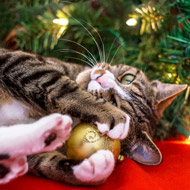
Pets remain a popular choice of present
Over one in ten people who received a pet for Christmas have already given it away, according to new research.
In a poll carried out by price comparison website confused.com, one in 14 (seven per cent) people who received a pet had to give it up as it was too difficult to look after.
A further one in 20 (six per cent) gave up their pets as they didn’t have enough time to look after them.
The poll was conducted in January on a sample of 2,000 UK adults. From this sample, over a quarter (27 per cent) said that they received a pet for Christmas. Of these, 16 per cent didn’t like their gift, and more than one in 10 (11 per cent) were shocked to find a furry friend in their stocking.
Commenting on the findings, Alex Webb, head of pet insurance at Confused.com, said: “It’s worrying to see how many unwanted pets there are in January, and how many pets have been given away after receiving them as a Christmas gift. However, this might not come as a surprise, when almost one in six (16 per cent) people who received a pet as a gift weren’t happy with it.
“Pets aren’t a gift that can be given and forgotten about quickly. Having a pet requires long term commitment and careful consideration should always be taken when buying a pet, whether the pet is for yourself or a gift for someone else. With this in mind it’s shocking to see that over 10% of people who bought a pet as a present did so as a last minute purchase or as an impulse purchase.”
The survey also found that pets remain a popular choice of present, with more than 27 per cent of people ignoring the age old adage that a pet isn’t just for Christmas.
The findings are supported by a recent PDSA report which found that millions of pets are being bought with little or no research into their welfare needs.
Launched in November 2015, the PDSA’s fifth Animal Wellbeing Report (PAW) revealed that impulse buys are fuelling the pet welfare crisis, with over 4.5 million owners doing no research at all before getting a pet. The PDSA say that this lack of knowledge can lead to stressed, lonely, obese and aggressive pets.
The problem is not been helped by the celebrity trend for buying pets as presents, as demonstrated by singer Kanye West, who recently bought his wife Kim a white Persian Kitten.
“As a nation we seem to have a love for animals and our pets become valued and much loved family members, however they are a big responsibility,” said Alex. “Therefore we recommend that people are allowed to make their own choice on whether they want to own a pet. We understand that people want to give a unique gift that no one else would, but we urge people to think of the consequences of buying someone a pet as a present, for both the recipient and the pet itself.”


 Companies marketing medicines for small pets exempt from authorisation must submit their annual return to the Veterinary Medicines Directorate (VMD) by 30 November 2026.



