


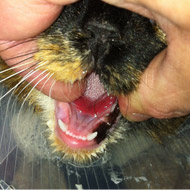
Seventy cats a year poisoned by patio cleaner
Cat owners are being warned about the dangers of benzalkonium chloride and other disinfectants as part of International Cat Care's campaign 'Keeping Cats Safe'.
Benzalkonium chloride is a cationic detergent that can be found in many household disinfectants including patio cleaners. Cationic detergents are irritants and can cause adverse effects in cats that have licked or walked over treated surfaces and then groomed or cleaned their paws and ingested the chemical.
Symptoms of benzalkonium chloride poisoning are often seen several hours after exposure and typically include drooling, a red inflamed tongue and a high temperature. The mouth may be extremely painful and cats can stop eating. The skin may also appear red and irritated. In very severe cases, especially without the correct veterinary treatment, exposure to the disinfectant can be fatal.
The Veterinary Poisons Information Service reports receiving an average of 70 calls per year about cats being poisoned as a result of exposure to benzalkonium chloride, and around 35 calls each year for other disinfectants.
Now, International Cat Care are highlighting several of these cases on its website to help raise owner awareness. One case involves a cat who developed a high temperature and ulcerations it his mouth just 12 hours after walking on a recently cleaned patio. The cat was treated with fluids, pain relief and fed soft food only, and after six days was lucky enough to make a full recovery.
International Cat Care recommends that owners keep all disinfectants well out of the reach of cats, as the greatest risk ones when cats are exposed to concentrated solutions of the disinfectant.
Cats should also be kept off treated surfaces until the area is complete dry, and where concentrated disinfectants are used, the area should be thoroughly rinsed. This is particularly important if the treated areas becomes wet again as the product may still be present. To be completely safe, the charity has issued advice on several alternative methods of cleaning.
Finally, the charity urge owners to wash off any disinfectant that their cat may have come into contact with and seek veterinary advice immediately - the quicker the cat receives treatment, the more positive the outcome.
To learn more about the dangers of disinfectants, visit http://icatcare.org/advice/keeping-cats-safe/disinfectants
Image (C) International Cat Care/Bates and Edwards, VPIS)


 Defra has published guidance for the vet sector ahead of a proposed UK-EU Sanitary and Phytosanitary agreement.



