


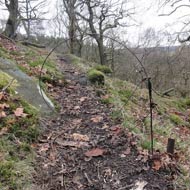
Calls for a snare ban after injuries in the Peak District
Two runners have been injured by animal snares in the Peak District, prompting an investigation and calls for a change in the law.
Both runners were members of the Dark Peak Fell Runners. Bob Berzins, who represents the group, said the issue of snares has been under discussion in recent years, but not enough has been done to address it. Over the past five years, three other people are said to have been injured in the same area.
Mr Berzins said: "Both runners reported crashing to the ground and having trouble removing the snare which was tightly around the ankle. There was no visible warning around the snares.
One runner described "a gash on both sides of the ankle, with blood coming through and continuing to bleed the next day," he added.
A subsequent investigation of the nearby area was conducted by the League Against Cruel Sports (Lacs), who found around 100 snares in a small area frequented by runners, ramblers and dog walkers.
Mr Berzins has had meetings with the park and landowners, but despite asking for fences around the snares or warning signs to be put up, he says bamboo canes have only been put near some of the snares.
“I think the snares should be removed, and the law should be changed, because the snares are an ongoing risk to anyone wandering into that area," he added.
Another cause for concern is the fact that mountain hares, a species of conservation concern, also appear to be getting caught in the traps.
During their investigation, Lacs say they found numerous dead mountain hares laid on paths near snares. They also found three 'stink pits', which contain dead animal carcasses and are used to lure foxes to the snares. All of these contained mountain hares, as well as foxes and birds, the group reports.
A rarity in the UK, mountain hares are only present in the Peak District, Scotland and the Isle of Man. They are listed as a 'species of conservation concern' in the UK Biodiversity Action Plan.
Caroline Hanson from the Moscar Estate, which owns the land, told The Independent that part of the area containing snares is fenced off and marked with canes, but these had been tampered with in some cases. She also said the snares were marked on a map that had been made available to the runners.
"Snaring is a legitimate thing that we do," she told The Independent. "We have some amazing, beautiful moorland, but it needs to be managed."
Image courtesy of the League Against Cruel Sports


 Defra has published guidance for the vet sector ahead of a proposed UK-EU Sanitary and Phytosanitary agreement.



