


Owners urged to get their cats spayed
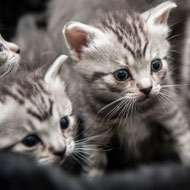
"Most owners would be reluctant to let their cat have a second litter of kittens having gone through the process once."
Animal welfare charities across the UK are today, World Spay Day, joining forces and urging owners to get their cats spayed to protect them from getting pregnant and contracting deadly preventable diseases.
According to research by the PDSA, almost one million cats are not neutered, putting them at risk of cancer, pyometra (infection of the womb) and FIV - the feline equivalent of HIV.
Thousands of felines are also at risk of giving birth to unwanted litters, causing UK households distress and putting pressure on rehoming centres, which are already at full capacity.
Nine animal welfare charities which make up the Cat Population Control Group (CPCG) have released new figures after surveying cat owners in time for World Spay Day (Tuesday 24 February).
The poll revealed that over half who had experienced their cat having kittens, would not let them have kittens again.
Almost 30 per cent of all the owners whose cats had already had kittens said that they found the experience much harder than they thought it would be.
Many people said that one of the most challenging things to do was to physically give up the kittens. More than half of those surveyed said that they experienced difficulty in finding their kittens good homes, while 45 per cent said that they struggled to say goodbye.
Nicola Martin, head of pet health and welfare for PDSA and spokesperson for the CPCG, said: "Cat owners can have a romanticised view of letting their cat have kittens but the reality of looking after the litter can be very different.
"A common misconception is that cats should be allowed to have one litter before spaying them, but this simply isn't true.
"As our research has shown, most owners would be reluctant to let their cat have a second litter of kittens having gone through the process once.
"Our advice is to have female cats spayed at four months - before they attract the attention of local tom cats."
The CPCG comprises Battersea Dogs & Cats Home, the Blue Cross, Cats Protection, Celia Hammond Animal Trust, International Cat Care, The Mayhew Animal Home, PDSA, RSPCA and Wood Green.
For more information about World Spay Day visit: www.cats.org.uk/worldspayday.


 Veterinary practices are being urged to help owners safely dispose of any unused and expired pet medicines - not just antibiotics - during November's Animal Medicines Amnesty.



