


Unique study compares how bat and human cells respond to viruses
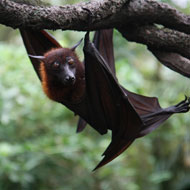
"By doing this we are at the beginning of understanding why these viruses are so dangerous to us and so benign to bats."
Scientists from the University of Bristol, together with CSIRO's Australian Animal Health Laboratories (AHHL) have been using cutting edge techniques to comprehensively compare the response of bat and human cells to a highly dangerous bat virus.
This is the first time that scientists have been able to study how cells from these two species respond to the same virus on a side-by-side basis.
The research focusses on the bat-borne Hendra virus which, like the Ebola virus, is not dangerous to bats but very dangerous to humans and some other animals.
In the study, the team at AAHL infected human cells with the Hendra virus and studied how the virus affects genes and proteins in the infected cells. At the same time, they also infected bat cells with the same virus and studied how the they responded.
Using a supercomputer, the research team identified about six thousand genes and proteins made by the bats and examined how they changed in response to the Hendra virus. A similar analysis was also carried out on the human cells.
The scientists found that human and bat cells respond very differently to the same virus. The bat cells responded robustly and quickly to the infection, triggering biochemical pathways that are known to be potentially helpful in other virus infections.
Conversely, the human cells were slower to respond to the virus. This indicates that human cells take longer to realise there is an infection and trigger the biochemical pathways that might protect someone from the infection becoming fatal.
Dr Michelle Baker, who headed the team at AAHL, said: "As with all fundamental scientific work there is a long way to go but we have shown how to compare two different animals (bats and humans) side by side and look at how thousands of genes and proteins respond to the same bat virus.
By doing this we are at the beginning of understanding why these viruses are so dangerous to us and so benign to bats. Indeed the kind of bat cells we use in this experiment are from a similar type of fruit bat as those which harbour Ebola virus in Africa."


 Veterinary practices are being urged to help owners safely dispose of any unused and expired pet medicines - not just antibiotics - during November's Animal Medicines Amnesty.



