


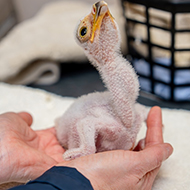
Five secretarybirds hatch as part of an international breeding programme.
Keepers at Chester Zoo are celebrating the arrival of five secretarybird chicks, marking the first time the species has been bred at the zoo in its 95-year history.
The chicks hatched to parents John and Jolene, who arrived at the zoo as part of a coordinated international effort to safeguard the future of one of Africa’s rarest birds of prey.
Chester Zoo is only one of a few zoos in the UK caring for secretary birds. Only 79 birds exist across the entire European conservation breeding programme, with just three other chicks having hatched elsewhere.
Experts believe the techniques developed at Chester Zoo could now help conservation zoos across Europe boost breeding success.
Jamie Cartwright-Stock, a bird keeper behind the breeding success at Chester Zoo, said: “Seeing five healthy chicks hatch in such a short space of time is an incredible achievement for everyone involved.
“Since John and Jolene arrived at the zoo only a few years ago, we’ve spent a considerable amount of time learning everything we can about their courtship behaviours, breeding biology and exactly what conditions they need to reproduce successfully. We've refined every aspect of their care in a special behind-the-scenes breeding facility at the zoo to reach this point - it really feels like we've reached a major breakthrough.”
With their long, thin legs and distinctive black crest of feathers, secretarybirds are among the world’s most unusual birds of prey. Unlike hawks and eagles, they hunt primarily on foot - striding across African grasslands in pursuit of prey.
In recent years, wild secretary bird populations have decreased dramatically due to the loss of vast areas of Africa’s grasslands to agriculture and urban development. It is estimated that fewer than 6,700 birds remain in the wild.
Andrew Owen, head of birds at Chester Zoo, said: Every chick hatched in conservation zoos is becoming increasingly important for the future of this remarkable species. With five new chicks, we’re playing a leading role in the conservation of these incredible birds.
"
Image (C) Chester Zoo.


 Companies marketing medicines for small pets exempt from authorisation must submit their annual return to the Veterinary Medicines Directorate (VMD) by 30 November 2026.



