


Five cases involved infection from recently imported horses.
Horse owners have been reminded to be vigilant and take proactive measures following a rise in equine influenza (EI) outbreaks.
Equine Infectious Disease Surveillance (EIDS), a Cambridge University-based service that monitors and controls equine infectious diseases, has confirmed outbreaks on premises in six separate counties of England since the beginning of April.
In addition to reports from Berkshire, Hampshire, Kent, Lincolnshire and North Yorkshire, EIDS is aware of another confirmed outbreak in the East of England.
An EIDS spokesperson noted that the outbreaks reported in the first 10 days of April stand in stark contrast to the first quarter of 2026, when only two EI outbreaks were reported across all of the UK.
Five of the current cases involved EI infection from recently imported horses, while two of the cases were confirmed in horses that had been vaccinated.
The spokesperson added: ‘EIDS therefore urges horse owners and their veterinary surgeons to be vigilant for the emergence of signs of respiratory disease (pyrexia, inappetence, coughing and nasal discharge) among animals under their care.
‘This is particularly true among recently arrived and non-vaccinated animals, although signs in vaccinated horses should be taken seriously and also be investigated. Diagnosis relies on upper respiratory tract samples being collected and tested by either conventional laboratory methods (qPCR) or point-of-care testing at the practice (LAMP, iiPCR) for presence of viral RNA.
‘If you have a positive laboratory or point of care test result for EI, please do take the trouble to report this to EIDS via the online disease reporting platform here; just register on the system with your email and away you go!’
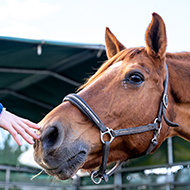
Image (C) WRCreatives/Shutterstock.


 Companies marketing medicines for small pets exempt from authorisation must submit their annual return to the Veterinary Medicines Directorate (VMD) by 30 November 2026.



