


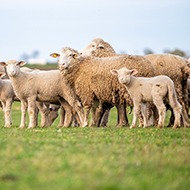
The disease remains widespread on UK sheep farms.
A survey conducted by the Royal Veterinary College (RVC) has identified a number of opportunities to improve the prevention and control of orf virus.
A common viral disease of goats and sheep, orf virus one of the biggest causes of economic loss to sheep farmers globally. However, there is little understanding about how often the disease occurs and how it is managed.
A total of 421 UK sheep farmers participated in the research, making this the first UK-based study of this scale to investigate farmers’ current orf treatment practices.
The findings show that orf remains widespread on UK sheep farms, with 88.8 per cent of respondents reporting having identified orf lesions in their sheep. An average treatment cost of £5 per affected lamb and £100 per affected flock were reported by the farmers, underscoring the ongoing economic impact of the disease.
The most reported treatment used by 65.2 per cent of respondents was topical antibiotic sprays. A further 26.7 per cent used injectable antibiotics and 22.7 per cent reported using both injectable and topical antibiotics.
A notable 13.6 per cent of respondents used salt licks as part of their orf treatment practices. However, only 34.5 per cent said they used pain relief in affected animals.
Just 23.8 per cent of farmers flock consulted a veterinary surgeon when orf was suspected.
Importantly, the study highlighted several human health conditions. A third of respondents reported having contracted orf themselves.
Those who reported wearing gloves some or all of the time was significantly less likely to contract the disease, with their likelihood of infection only 64 per cent of that of those who never wore gloves.
Researchers say their findings highlight the need for discussion between sheep farmers and vets on treatment options, the zoonotic risk and the importance of ensuring other diseases with similar clinical presentations are not overlooked – and that antimicrobials are only used when necessary.
Beth Reilly, Senior Teaching Fellow in Small Ruminant Health and Flock Management at the RVC, said: “Our online survey set out to establish current orf treatment practices on UK sheep holdings, as there is currently no licenced treatment.
Eighty eight percent of respondents had seen orf on their holdings and reported a wide variety of treatments. An unexpected finding was the use of salt licks by 13.6 per cent of respondents as part of orf treatment, highlighting the need for further research into the potential of this for orf treatment and control.”
David Charles, International Business Development Manager at NoBACZ Healthcare, said: “Orf virus remains one of the big causes of economic and production loss to sheep farmers globally. Until recently, the true prevalence and economic impact have likely been underestimated, with the most recent previous work being done over a decade ago.
“At NoBACZ, we are proud to be a highly evidence-based company, and we were thrilled to work with the RVC on this research to improve our understanding of this challenging disease: widening the evidence-base and growing our sector's understanding of prevalence, economic impact and understanding what farmers were using.
“Crucially, this data has shown just how much antibiotic is used for what is a viral disease, clearly showing areas where we can support education and behaviour changes to lead to improved antimicrobial stewardship and increase the responsible use of antibiotics."
Image (C) Aleksandar Malivuk/Shutterstock


 Companies marketing medicines for small pets exempt from authorisation must submit their annual return to the Veterinary Medicines Directorate (VMD) by 30 November 2026.



