


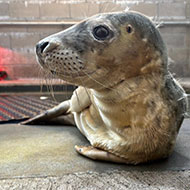
The Scottish SPCA is caring for as many as 50 pups at any one time.
The Scottish SPCA has launched a fundraising appeal following a steep rise in seal pup admissions to its National Wildlife Rescue Centre in Fishcross, Alloa.
The centre says the centre is managing its busiest period for grey seal rescue and rehabilitation, with as many as 50 pups in its care at one time. Each one requires round-the-clock attention, veterinary treatment, and medication.
Last May, unseasonably warm weather triggered the start of a busy seal season for the SSPCA. Twenty-five orphaned seal pups arrived at once, with admissions continuing to rise in the weeks that followed.
In response, staff at the centre developed an innovative bottle-feeding technique with a balanced seal specific milk formula. The method has transformed early-stage care for premature and vulnerable pups, providing a positive, low-stress feeding experience.
It is thought the current peak in admissions is being driven by human interference. The Scottish SPCA says well-meaning members of the public can unintentionally cause abandonment by approaching pups, while disturbing a pregnant seal can also trigger early birth and abandonment.
One seal who is currently receive treatment is Zelda, who arrived severely underweight and covered in infected wounds, most likely from an attack by a bull seal or an unleashed dog.
Scotland is home to around 90 per cent of the UK’ seal population. Harbour seals are already vulnerable, with their population on the west coast declining by around 20 per cent in recent years.
Donations from the fund will help the charity to cover the costs of rescuing, treating and rehabilitating seal pups during this exceptionally busy period.
Image (C) Scottish SPCA.


 Companies marketing medicines for small pets exempt from authorisation must submit their annual return to the Veterinary Medicines Directorate (VMD) by 30 November 2026.



