


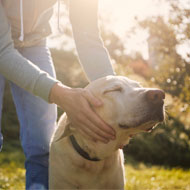
The guidance is designed to be useable in everyday practice.
An international group of experts has published new guidelines to help vets recognise and diagnose canine dementia more effectively.
The guidance, published in the Journal of the American Veterinary Medical Association (JAVMA), also highlights that canine dementia has the potential to advance understanding of human dementia, particularly Alzheimer’s disease.
Canine cognitive dysfunction syndrome (CCDS) affects many older dogs, particularly those over the age of eight. However, the signs are often mistaken as ‘normal ageing’, so the condition goes undiagnosed, impacting animal welfare.
To address this problem, an expert group led by Natasha Olby, professor at the NC State University College of Veterinary Medicine, set out to clearly define the key signs of the condition.
These include disorientation, changes in social interaction, disrupted sleep-wake cycles, house soiling, altered activity levels and increased anxiety.
Because CCDS shares many features with Alzheimer’s disease, the team deliberately modelled the new guidelines on existing Alzheimer’s research frameworks.
Designed to be useable in everyday practice, the guidance provide a step-by-step approach for vets to recognise when a dog’s behaviour may signal cognitive decline. They also describe three stages of disease severity showing how a dog’s condition changes over time.
Experts hope the guidelines will improve care for ageing dogs and their families, while also providing the foundations for future research into the causes, progression, and treatment of canine cognitive dysfunction syndrome.
Professor Olby said: “The guidelines are only the start of the process of defining and identifying cognitive decline and dysfunction in dogs. They have been developed to be accessible to primary veterinarians and their pet owners and will help to unify efforts to detect cognitive decline in its early stages.”
Image (C) Jaromir Chalabala/Shutterstock.com


 Companies marketing medicines for small pets exempt from authorisation must submit their annual return to the Veterinary Medicines Directorate (VMD) by 30 November 2026.



