
Your data on MRCVSonline
The nature of the services provided by Vision Media means that we might obtain certain information about you.
Please read our Data Protection and Privacy Policy for details.

In addition, (with your consent) some parts of our website may store a 'cookie' in your browser for the purposes of
functionality or performance monitoring.
Click here to manage your settings.
If you would like to forward this story on to a friend, simply fill in the form below and click send.

Your friend's email:
Your email:
Your name:
 
 
Send Cancel

Data reveals widespread mineral deficiencies in suckled calves
“It’s vital farmers understand what’s happening within the herd so that any nutritional gaps can be addressed before they impact calf health" - Nia Williams.

SRUC review also found a quarter of calves had respiratory disease.  

Suckler cow producers are being urged to reassess their supplementation programmes following a review that found widespread mineral deficiencies in suckled calves.

The call from animal health firm Nettex comes as the company highlights findings from 1,662 post-mortems on calves under six months old. 

Conducted by SRUC Veterinary Services, the survey revealed over half of the calves had vitamin E and selenium deficiencies, both of which are essential for immunity and disease resistance.

The review also identified that over a quarter of calves showed evidence of respiratory disease. 

Nettex argues that such deficiencies significantly increase disease risk – particularly in young or fast-growing calves. Nia Williams, Technical Manager with Nettex, said: 

“Both elements have antioxidant properties, are important in immune function, and help protect cell membranes, especially in muscle cells. Deficiency is more common in beef animals fed home-grown forages from selenium-deficient pastures without access to suitable mineral supplementation.”

She adds that ensuring cows are adequately supplemented throughout pregnancy is key to supporting calf health.

“It’s vital farmers understand what’s happening within the herd so that any nutritional gaps can be addressed before they impact calf health.

“As the SRUC data highlights, nearly a quarter of calves examined at post-mortem had respiratory disease. Illness is often multi-factorial, but ensuring adequate trace element status is a key part of maintaining healthy, resilient animals.”

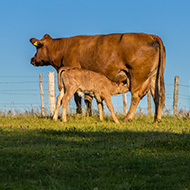
Image (C) Shutterstock/Gottfried Carls.

Become a member or log in to add this story to your CPD history

Equine Disease Surveillance report released for Q4 2025

News Story 1
 The latest Equine Disease Surveillance report has been released, with details on equine disease from Q4 of 2025.

The report, produced by Equine Infectious Disease Surveillance, includes advice on rule changes for equine influenza vaccination.

Statistics and maps detail recent outbreaks of equine herpes virus, equine influenza, equine strangles and equine grass sickness. A series of laboratory reports provides data on virology, bacteriology, parasitology and toxicosis.

This issue also features a case study of orthoflavivus-associated neurological disease in a horse in the UK. 

Click here for more...
News Shorts
NSA webinar explores sheep tailing and castration

The National Sheep Association (NSA) is to host a free webinar on the castration and tail docking of lambs.

The webinar, 'Understanding the tailing and castration consultation: A guide for sheep farmers', will be hosted online on Monday, 2 March 2026 at 7.30pm.

It comes during a government consultation into the methods used for these procedures. Farmers are encouraged to engage before the consultation period closes on Monday, 9 March 2026.

The webinar offers clear and actionable guidance to support farmers to contribute meaningfully to the consultation and prepare for potential changes.

On the panel will be former SVS president Kate Hovers, farmer and vet Ann Van Eetvelt and SRUC professor in Animal Health and Veterinary Sciences Cathy Dwyer. Each panel member will utilise their own specialism and expertise to evaluate risks and outcomes to sheep farming.

Find out more about the webinar on the NSA website.

