


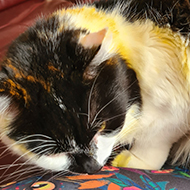
Owners are being urged to avoid the plant this Mother’s Day.
With Mother’s Day fast approaching (30 March), cat owners are being reminded about the dangers of lilies and to contact their vet if they suspect their cat has been in contact with the flowers.
The reminder from national feline charity, Cats Protection, comes after one of its regional volunteers said she was not aware of the risks associated with the flower before joining the charity.
Lynne Meredith was sent a bouquet by a friend which had included lilies, but it wasn’t until her cat, Malakai, pulled the vase over and became covered in pollen that she became aware of the harm the flowers could potentially cause.
She said: “He was startled from pulling the vase over and getting covered in water and pollen so he came running to me. I quickly googled what I could use to get the pollen off him because it’s so hard to get off most surfaces and to my horror found it was toxic to cats.
“I quickly took a picture to show the vet and wasted no time in putting him in the sink and washing him thoroughly. I found his buster collar from when he was neutered and put it on him to stop him grooming, then phoned the vet for advice.”
Thankfully Malakai had not consumed any of the pollen, nor had he eaten any other part of the plant. However, the vet advised her to closely observe and take him to the clinic immediately if she spotted any unusual behaviour or symptoms like diarrhoea and vomiting.
In light of the incident, Lynne is now spreading the word about lilies to ensure that no more cats come to any harm from the flowers.
Lynne adds: “I’ve told all my friends with cats to make sure they never have lilies in the house or garden and cannot believe flower companies aren’t required to ask whether bouquets are being sent to a household with cats during checkout. Something so simple would prevent cats from unnecessary danger, suffering and even death.”
While lilies are one of the most toxic plants to cats, cat owners should also be on high alert for tulips, daffodils, iris and peonies. All of these flowers can be poisonous to cats if eaten, with signs including salivation, vomiting diarrhoea, fitting and breathing difficulties.
Some examples of non cat-friendly indoor plants include cheese plants, aloe vera and dumb cane. A full list of cat-safe and unsafe plants is available on the Cats Protection website.
Image (C) Cats Protection.


 Companies marketing medicines for small pets exempt from authorisation must submit their annual return to the Veterinary Medicines Directorate (VMD) by 30 November 2026.



