


RSPCA reminder ahead of New Year celebrations
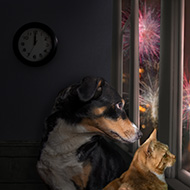
"We’d like to direct those who are worried about their pets to look at our guidance online" - Shelley Phillips, RSPCA.
Animal welfare charity RSPCA is calling on the public to consider the needs of animals as the nation prepares to ring in the New Year.
The organisation is also urging pet owners to get ahead with soundproofing and the provision of safe enclosures to reduce firework phobia among companion animals.
Under its #BangoutofOrder campaign, the RSPCA has long campaigned for the UK Government to review fireworks regulations, with several local animal authorities taking steps within their communities to minimise the risk fireworks pose to animals.
Shelley Phillips, RSPCA campaigns manager, said: “As many of us celebrate the start of 2023, the festivities can also be stressful for many animals - including our pets.
“We’d like to direct those who are worried about their pets to look at our guidance online so they can hopefully undertake some measures to keep their pets safe and to ease their pets’ fear of loud noises.
"From making sure dogs and cats are indoors when fireworks are likely to be set off, to masking firework noises and providing pets with a safe place to hide at all times, it's so important pet owners plan ahead.
“Small animals living outside should be provided with lots of extra bedding to allow for burrowing, whilst parts of their enclosure could be covered with a blanket to provide further sound-proofing and insulation.”
The RSPCA is also reminding people of the possible dangers of using sky lanterns as part of any New Year celebrations.
Shelley added: “Sky lanterns, commonly known as ‘Chinese lanterns’, present a significant danger to animals and can cause injuries which lead to suffering and a slow, painful death.
"Risks to animals include ingestion, entanglement and entrapment; whilst lanterns can also cause fire, destroy habitats or damage animal housing and feed. The consequences of a lit or hot lantern landing in stables or barns occupied by horses or farm animals surrounded by dry, flammable bedding and forage are truly horrific to imagine.
"Whilst sky lanterns may look pretty, people need to remember that what goes up, must come down - so, for animals’ sake, we're urging the public to give sky lanterns a miss this New Year."


 Veterinary practices are being urged to help owners safely dispose of any unused and expired pet medicines - not just antibiotics - during November's Animal Medicines Amnesty.



